Back to search
HR 8058 - 119

United States Secret Service Reserve Fund Act of 2026

Referred to the House Committee on the Judiciary.

Bill highlights

Votes, text signals, source context, and latest movement from this record.

Bill Text Stats

3
Analyzed sections
$106.0M
Detected dollar total
0
Tax signals
2
Deadlines

Signal counts

Tax density 0.0%
Spending density 366.7%
Spending 11
Deadline 2
Agency 1
Statutory Reference 1
Studies 1

Top agencies

Secretary of the Treasury 1

Statutory references

section 3056 of title 18 1

House Votes

No House roll call votes have been linked to this bill yet.

Timeline

Mar 24, 2026

Introduced in House

Mar 24, 2026

Introduced in House

Mar 24, 2026

Referred to the House Committee on the Judiciary.

Affected Sectors

How to read this

Sectors are deterministic matches from official Congress.gov data and cached bill text. They are source-derived signals, not conclusions about intent or economic effect.

Evidence matches count official fields, normalized subjects, cached text snippets, or extracted entities that matched the sector rules.

Impact is a bill-level rollup used for sorting and filtering. It is not an economic impact estimate.

Confidence is the strongest individual match score behind that sector.

Evidence snippets show why a sector matched and can repeat when Congress.gov repeats the same phrase across official fields.

Finance and banking
20 evidence matches
Impact 100% Confidence 80%

Secretary of the Treasury secretary of the treasury

Secretary of the Treasury secretary of the treasury

Secretary of the Treasury shall deposit amounts appropriated under this section to the United States Secret Service Reserve Fund secretary of the treasury shall deposit amounts appropriated under this section to the united states secret ser

CBO Cost Estimates

Official Congressional Budget Office cost estimate links associated with this bill through Congress.gov records.

How to read this

CBO estimates are official source documents with their own assumptions, scope, and publication dates. They can score a bill, a version of a bill, or a broader legislative package.

LawLinter stores the source link from Congress.gov and does not replace the CBO document. Use these cards as pointers for source review, not as independent fiscal advice.

CBO context shows source-attributed Congressional Budget Office cost estimates linked from official Congress.gov bill records. It is research context only; read the official CBO source document for assumptions, scope, and dates.

No CBO cost estimate is currently linked for this bill.

Campaign Finance Context

Related FEC/OpenFEC campaign-finance records for lawmakers and candidates tied to this bill through source-attributed legislative relationships. These are not donations to the bill itself.

How to read this

Amounts shown here are campaign-finance totals for sponsor or cosponsor-linked candidates and their committees in the displayed FEC cycle.

They are not donations to this bill, spending on this bill, or proof that money influenced or caused sponsorship, cosponsorship, votes, or legislative outcomes.

If multiple linked lawmakers have FEC records, this section can show multiple candidate cards and separate sponsor/cosponsor rollups.

Campaign-finance context uses source-attributed FEC/OpenFEC records that are related or relevant to the displayed bill, lawmaker, candidate, committee, or legislative relationship through deterministic links. It is research context only, not proof of influence, causation, endorsement, or that money caused a sponsorship, vote, or legislative outcome.

No FEC/OpenFEC campaign-finance context is currently linked for this bill.

Lobbying Context

Related LDA.gov filings where public lobbying activity descriptions reference this bill. These records are source-attributed research context, not evidence of influence or causation.

How to read this

LDA filings are public lobbying disclosure records. LawLinter links them here only when the filing activity text contains an exact-looking reference to this bill.

A filing can mention many issues, clients, agencies, or bills. A match should be treated as a pointer for review, not as a conclusion about why legislation changed or how any lawmaker acted.

Lobbying context uses source-attributed LDA.gov records that appear related to this bill through bill references in public lobbying activity descriptions. It is research context only, not proof of influence, causation, endorsement, lobbying effectiveness, or legislative intent.
No LDA.gov lobbying disclosure context is currently linked for this bill.

Summary

00 Introduced in House Jul 9, 2026

United States Secret Service Reserve Fund Act of 2026 This bill establishes the United States Secret Service Reserve Fund for the payment of expenses related to the protection of Presidents, their families, and other individuals designated under current law (including the salaries of employees who directly provide such protection) during a lapse in appropriations for the U.S. Secret Service (USSS). The bill also provides appropriations for the fund. The fund may only be used during the period that (1) begins on the date of a lapse in appropriations for the USSS, and (2) ends on the earlier of the date on which the lapse in appropriations ends or the date that is 30 days after the lapse began. Under the bill, any amounts that remain in the fund and have not been used as of December 31, 2026, must be transferred to the Department of the Treasury and rescinded. The unused funds must be transferred by January 31, 2027. The bill also requires the USSS to report to Congress on the uses of, and the transactions relating to, the reserve fund.

00 Introduced in House Jul 9, 2026

United States Secret Service Reserve Fund Act of 2026 This bill establishes the United States Secret Service Reserve Fund for the payment of expenses related to the protection of Presidents, their families, and other individuals designated under current law (including the payment of the salaries of employees who directly provide such protection) during a lapse in appropriations for the U.S. Secret Service (USSS). The bill also provides appropriations for the fund. The fund may only be used during the period that (1) begins on the date of a lapse in appropriations for the USSS, and (2) ends on the earlier of the date on which the lapse in appropriations ends or 30 days after the lapse began. Under the bill, any amounts that remain in the fund and have not been used as of December 31, 2026, must be transferred to the Department of the Treasury and rescinded. The unused funds must be transferred by January 31, 2027. The bill also requires the USSS to report to Congress on the uses of, and the transactions relating to, the reserve fund.

00 Introduced in House Jul 9, 2026

United States Secret Service Reserve Fund Act of 2026 This bill establishes the United States Secret Service Reserve Fund for the payment of expenses related to the protection of Presidents, other specified federal government officials, and their families (including the payment of the salaries of employees who directly provide such protection) during a lapse in appropriations for the U.S. Secret Service (USSS). The bill also provides appropriations for the fund. The fund may only be used during the period that (1) begins on the date of a lapse in appropriations for the USSS, and (2) ends on the earlier of the date on which the lapse in appropriations ends or 30 days after the lapse began. Under the bill, any amounts that remain in the fund and have not been used as of December 31, 2026, must be transferred to the Department of the Treasury and rescinded. The unused funds must be transferred by January 31, 2027. The bill also requires the USSS to report to Congress on the uses of, and the transactions relating to, the reserve fund.

Sponsors

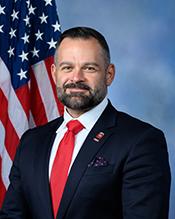
Mills, Cory
Sponsor

Mills, Cory

Republican · FL-7 · M001216

Joined Mar 24, 2026
Website
N/A
Office
346 Cannon House Office Building

Amendments

No amendment records are currently available for this bill.
Compiled bill record. Bill pages combine Congress.gov source payloads, normalized relationships, cached text analysis, vote links, and deterministic sector/signal extraction. This is not an official government record or legal advice; use the official source link when accuracy matters.