Back to search

Bill Text Stats

12
Analyzed sections
N/A
Detected dollar total
0
Tax signals
12
Deadlines

Signal counts

Tax density 0.0%
Spending density 0.0%
Statutory Reference 15
Deadline 12
Amendments 5
Agency 3
Studies 3
Benefits 1
Privacy 1
Rulemaking 1

Top agencies

agency shall 3

Statutory references

5 USC 3304 3
Section 3304 of title 5 3
22 U.S.C. 3008 1
22 U.S.C. 6918 1
42 U.S.C. 17013 1
5 USC 101 1
Public Law 118-188 1
section 2102 of title 5 1

House Votes

No House roll call votes have been linked to this bill yet.

Timeline

Dec 23, 2024

Presented to President.

Dec 23, 2024

Presented to President.

Dec 23, 2024

Signed by President.

Dec 23, 2024

Signed by President.

Dec 23, 2024

Became Public Law No: 118-188.

Dec 23, 2024

Became Public Law No: 118-188.

Dec 16, 2024

Received in the House.

Dec 16, 2024

Held at the desk.

Dec 16, 2024

Mr. Burlison moved to suspend the rules and pass the bill.

Dec 16, 2024

Considered under suspension of the rules. (consideration: CR H7215-7218)

Dec 16, 2024

DEBATE - The House proceeded with forty minutes of debate on S. 59.

Dec 16, 2024

Passed/agreed to in House: On motion to suspend the rules and pass the bill Agreed to by voice vote. (text: CR H7216-7217)

Dec 16, 2024

On motion to suspend the rules and pass the bill Agreed to by voice vote. (text: CR H7216-7217)

Dec 16, 2024

Motion to reconsider laid on the table Agreed to without objection.

Dec 13, 2024

Message on Senate action sent to the House.

Dec 12, 2024

Measure laid before Senate by unanimous consent. (consideration: CR S7041-7043)

Dec 12, 2024

The committee substitute withdrawn by Unanimous Consent.

Dec 12, 2024

Passed/agreed to in Senate: Passed Senate with an amendment by Unanimous Consent.

Dec 12, 2024

Passed Senate with an amendment by Unanimous Consent. (text of amendment in the nature of a substitute: CR S7010-7011)

Dec 2, 2024

Committee on Homeland Security and Governmental Affairs. Reported by Senator Peters with an amendment in the nature of a substitute. With written report No. 118-250.

Dec 2, 2024

Committee on Homeland Security and Governmental Affairs. Reported by Senator Peters with an amendment in the nature of a substitute. With written report No. 118-250.

Dec 2, 2024

Placed on Senate Legislative Calendar under General Orders. Calendar No. 651.

Jul 31, 2024

Committee on Homeland Security and Governmental Affairs. Ordered to be reported with an amendment in the nature of a substitute favorably.

Jan 24, 2023

Introduced in Senate

Jan 24, 2023

Read twice and referred to the Committee on Homeland Security and Governmental Affairs.

Affected Sectors

How to read this

Sectors are deterministic matches from official Congress.gov data and cached bill text. They are source-derived signals, not conclusions about intent or economic effect.

Evidence matches count official fields, normalized subjects, cached text snippets, or extracted entities that matched the sector rules.

Impact is a bill-level rollup used for sorting and filtering. It is not an economic impact estimate.

Confidence is the strongest individual match score behind that sector.

Evidence snippets show why a sector matched and can repeat when Congress.gov repeats the same phrase across official fields.

Technology and data privacy
43 evidence matches
Impact 100% Confidence 84%

Computers and information technology

Privacy r determines under subsection (a) that any updates or revisions are necessary, the Director, in accordance with section 552a of title 5, United States Code (commonly known as the “Privacy Act”), shall promptly— (1) issue the updates

Privacy determines under subsection (a) that any updates or revisions are necessary, the Director, in accordance with section 552a of title 5, United States Code (commonly known as the ``Privacy Act''), shall promptly-- (1) issue the update

Energy
30 evidence matches
Impact 100% Confidence 80%

Relations Act of 2000 ( 22 U.S.C. 6918(e)(2) ) is amended by striking “ 3304(c)(1) ” and inserting “ 3304(i)(1) ”. (D) Energy independence and security act of 2007.— Section 136(i)(1) of the Energy Independence and Security Act of 2007 ( 4

(C) U.S.-China relations act of 2000.--Section 308(e)(2) of the U.S.-China Relations Act of 2000 (22 U.S.C. 6918(e)(2)) is amended by striking ``3304(c)(1)'' and inserting ``3304(i)(1)''. (D) Energy independence and security act of 2007.--

striking ``3304(a)(3)'' and inserting Section 136(i)(1) of the Energy Independence and Security Act of 2007 (42 U.S.C. 17013(i)(1)) is amended by striking ``3304(a)(3)'' and inserting ``3304(b)(3)''. (E) Subsection headings.--Section 3304 o

Education
5 evidence matches
Impact 94% Confidence 80%

d (3) by inserting in a jurisdiction in which the duties of the position are to be performed after a prescribed minimum education. (b) Implementation (1) Regulations and guidance documents Not later than 1 year after the date of enactment o

lly before performed; and (3) by inserting in a jurisdiction in which the duties of the position are to be performed after a prescribed minimum education. (b) Implementation (1) Regulations and guidance documents Not later than 1 year after

lly before performed; and (3) by inserting in a jurisdiction in which the duties of the position are to be performed after a prescribed minimum education. (b) Implementation (1) Regulations and guidance documents Not later than 1 year after

Defense
2 evidence matches
Impact 87% Confidence 78%

Homeland Security and Governmental Affairs Committee Standing Senate

nt that an applicant can pass or fail. (8) Relevant committees The term relevant committees means— (A) the Committee on Homeland Security and Governmental Affairs of the Senate; and (B) the Committee on Oversight and Accountability of the H

CBO Cost Estimates

Official Congressional Budget Office cost estimate links associated with this bill through Congress.gov records.

How to read this

CBO estimates are official source documents with their own assumptions, scope, and publication dates. They can score a bill, a version of a bill, or a broader legislative package.

LawLinter stores the source link from Congress.gov and does not replace the CBO document. Use these cards as pointers for source review, not as independent fiscal advice.

CBO context shows source-attributed Congressional Budget Office cost estimates linked from official Congress.gov bill records. It is research context only; read the official CBO source document for assumptions, scope, and dates.

Campaign Finance Context

Related FEC/OpenFEC campaign-finance records for lawmakers and candidates tied to this bill through source-attributed legislative relationships. These are not donations to the bill itself.

How to read this

Amounts shown here are campaign-finance totals for sponsor or cosponsor-linked candidates and their committees in the displayed FEC cycle.

They are not donations to this bill, spending on this bill, or proof that money influenced or caused sponsorship, cosponsorship, votes, or legislative outcomes.

If multiple linked lawmakers have FEC records, this section can show multiple candidate cards and separate sponsor/cosponsor rollups.

Campaign-finance context uses source-attributed FEC/OpenFEC records that are related or relevant to the displayed bill, lawmaker, candidate, committee, or legislative relationship through deterministic links. It is research context only, not proof of influence, causation, endorsement, or that money caused a sponsorship, vote, or legislative outcome.

No FEC/OpenFEC campaign-finance context is currently linked for this bill.

Lobbying Context

Related LDA.gov filings where public lobbying activity descriptions reference this bill. These records are source-attributed research context, not evidence of influence or causation.

How to read this

LDA filings are public lobbying disclosure records. LawLinter links them here only when the filing activity text contains an exact-looking reference to this bill.

A filing can mention many issues, clients, agencies, or bills. A match should be treated as a pointer for review, not as a conclusion about why legislation changed or how any lawmaker acted.

Lobbying context uses source-attributed LDA.gov records that appear related to this bill through bill references in public lobbying activity descriptions. It is research context only, not proof of influence, causation, endorsement, lobbying effectiveness, or legislative intent.

No LDA.gov lobbying disclosure context is currently linked for this bill.

Summary

49 Public Law Aug 19, 2025

Chance to Compete Act of 2024 This act requires federal agencies to use technical assessments to fill most positions in the competitive service. Under the act, a technical assessment is a tool relevant and specific to a position for which it is developed that allows for the demonstration of job-related skills, abilities, knowledge, and competencies. A technical assessment must be based upon a job analysis and may not solely or principally rely upon a self-assessment from an automated examination. (Sec. 3) Under the act, the Office of Personnel Management (OPM) must develop and implement a plan for transitioning to using technical assessments for hiring into competitive service positions unless the hiring agency certifies that it is impracticable. No later than 18 months after the act's enactment, OPM must provide Congress with the plan for federal agencies to transition to the use of technical assessments. The plan must be implemented within three years after the act's enactment. In the three-year period following the bill's enactment, executive agencies must preference the use of technical assessments for hiring into competitive service positions to the maximum extent practicable. An agency that determines that the use of a technical assessment is impracticable must describe its rationale for using an alternative assessment in the applicable job posting. The act authorizes agencies to identify subject matter experts (SMEs) and agency talent teams to provide hiring support to the agency. SMEs in the job field of a given position may develop position-specific assessments that allow for an applicant to demonstrate job-related technical skills, abilities, and knowledge relevant to the position. OPM may establish a federal talent team to provide support to agency talent teams. No later than one year after the act's enactment, OPM must study and report to Congress regarding the feasibility of examining agencies sharing technical assessments and the development of an online platform where agencies can share and customize technical assessments. (Sec. 4) The act requires OPM to conduct a review of examinations for positions in the competitive service for which agencies have established a minimum educational requirement because the position is of a scientific, technical, or professional nature. OPM must determine whether such requirements are justified based on data, evidence, and other relevant information and provide Congress with recommendations to amend the hiring practices in accordance with the review's findings. The review must be conducted in consultation with appropriate agencies, employee representatives, external experts, and other relevant stakeholders. The report shall be provided within one year after the act's enactment. (Sec. 5) OPM must publish on a public-facing website and submit to Congress a report examining agencies' progress and any significant difficulties in implementing the act's requirements. The first report must be provided within one year after the act's enactment and subsequent reports provided annually until the fifth publication and submission of the report to Congress. OPM must also publish on a public facing website and submit to Congress an annual report of positions in the competitive service for which an examining agency examined applicants during the applicable period (limited to positions for which hiring is complete). The data must be broken down by applicant demographic indicators to facilitate direct comparisons to data available as of October 1, 2020, as a baseline. (Sec. 6) No later than three years after the act's enactment, the Government Accountability Office (GAO) must provide Congress with a report that assesses the implementation of the act, assesses changes to the hiring process for the competitive service, and makes recommendations to improve the hiring process for the competitive service. (Sec. 7) No later than one year after the act's enactment, OPM shall evaluate and revise, as appropriate to conform with the act, government-wide systems of records specified in the act. OPM must notify Congress of any revisions.

25 Reported to Senate Dec 19, 2024

Chance to Compete Act of 2024 This bill requires federal agencies to use technical assessments to fill most positions in the competitive service. Under the bill, the Office of Personnel Management (OPM) must develop and implement a plan for transitioning to using technical assessments for hiring into competitive service positions unless the hiring agency certifies that it is impracticable. Technical assessments must be developed by subject matter experts within each hiring agency and allow for candidates to demonstrate job-related skills and knowledge; however, they may not include an occupational questionnaire. An agency may determine that the use of a technical assessment to assess applicants for a position in the competitive service is not practicable and, instead, use an occupational questionnaire. (An occupational questionnaire is an evaluation system in which applicants self-rate their training and experience and that is commonly delivered through an automated system such as USAJobs.) OPM must also study and report to Congress regarding the feasibility of examining agencies sharing technical assessments and the development of an online platform to be used by the agencies. The OPM plan must be provided to Congress within 18 months after the bill's enactment and implemented within three years following the bill's enactment. During the three-year period beginning on the date of enactment of this bill, technical assessments must be preferred by hiring agencies.

00 Introduced in Senate May 25, 2023

Chance to Compete Act of 2023 This bill modifies examination requirements and other components of the federal hiring process for positions in the competitive service. Specifically, the bill provides that a qualifying examination includes a résumé review that is conducted by a subject matter expert. Additionally, beginning two years after the bill's enactment, the bill prohibits examinations from consisting solely of a self-assessment from an automated examination, a résumé review that is not conducted by a subject matter expert, or any other method of assessing an applicant's experience or education. Agencies may use subject matter experts to develop position-specific technical assessments that allow applicants to demonstrate job-related skills, abilities, and knowledge; assessments may include structured interviews, work-related exercises, procedures to measure career-related qualifications and interests, or other similar assessments. The bill also allows agencies to establish talent teams to support and improve hiring practices. The Office of Personnel Management (OPM) must create online platforms through which agencies may share and customize technical assessments and share the résumés of qualifying applicants. The OPM must also create online platforms with information about the types of assessments used and hiring outcomes.

Sponsors

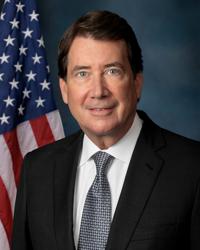
Hagerty, Bill
Cosponsor

Hagerty, Bill

Republican · TN · H000601

Joined Jan 24, 2023
Website
N/A
Office
251 Russell Senate Office Building Washington, DC 20510

Amendments

1 amendment
118/samdt/3325 Dec 12, 2024

In the nature of a substitute.

Amendment SA 3325 agreed to in Senate by Unanimous Consent.

Compiled bill record. Bill pages combine Congress.gov source payloads, normalized relationships, cached text analysis, vote links, and deterministic sector/signal extraction. This is not an official government record or legal advice; use the official source link when accuracy matters.