Back to search
S 2781 - 118

Good Samaritan Remediation of Abandoned Hardrock Mines Act of 2024

Became Public Law No: 118-155.

Bill highlights

Votes, text signals, source context, and latest movement from this record.

Bill Text Stats

24
Analyzed sections
N/A
Detected dollar total
0
Tax signals
13
Deadlines

Signal counts

Tax density 0.0%
Spending density 4.2%
Statutory Reference 45
Deadline 13
Agency 11
Courts 10
Benefits 5
Studies 4
Enforcement 1
Grants 1
Rulemaking 1
Spending 1

Top agencies

agency shall 3
Secretary of Agriculture 2
Administrator of an application 1
Administrator of the Environmental Protection Agency 1
Secretary of Agriculture or the Secretary of the 1
Secretary of the 1
Secretary of the Interior 1
Secretary of the Interior or the Secretary of 1

Statutory references

33 U.S.C. 1251 5
42 U.S.C. 9601 5
33 U.S.C. 1311 3
30 USC 1245 2
33 U.S.C. 1342 2
42 U.S.C. 9601 2
42 U.S.C. 9601 2
42 U.S.C. 9604 2

House Votes

No House roll call votes have been linked to this bill yet.

Timeline

Dec 17, 2024

Signed by President.

Dec 17, 2024

Signed by President.

Dec 17, 2024

Became Public Law No: 118-155.

Dec 17, 2024

Became Public Law No: 118-155.

Dec 12, 2024

Presented to President.

Dec 12, 2024

Presented to President.

Dec 10, 2024

Ms. Maloy moved to suspend the rules and pass the bill.

Dec 10, 2024

Considered under suspension of the rules. (consideration: CR H6570-6578)

Dec 10, 2024

DEBATE - The House proceeded with forty minutes of debate on S. 2781.

Dec 10, 2024

Passed/agreed to in House: On motion to suspend the rules and pass the bill Agreed to by voice vote. (text: CR H6570-6576)

Dec 10, 2024

On motion to suspend the rules and pass the bill Agreed to by voice vote. (text: CR H6570-6576)

Dec 10, 2024

Motion to reconsider laid on the table Agreed to without objection.

Aug 6, 2024

Received in the House.

Aug 6, 2024

Held at the desk.

Aug 2, 2024

Message on Senate action sent to the House.

Jul 31, 2024

Measure laid before Senate by unanimous consent. (consideration: CR S5665; text of amendment in the nature of a substitute: CR S5665-5670)

Jul 31, 2024

The committee substitute as amended agreed to by Unanimous Consent.

Jul 31, 2024

Passed/agreed to in Senate: Passed Senate with an amendment by Unanimous Consent. (text: CR S5670-5676)

Jul 31, 2024

Passed Senate with an amendment by Unanimous Consent. (text: CR S5670-5676)

Jan 25, 2024

Committee on Environment and Public Works. Reported by Senator Carper with an amendment in the nature of a substitute. Without written report.

Jan 25, 2024

Committee on Environment and Public Works. Reported by Senator Carper with an amendment in the nature of a substitute. Without written report.

Jan 25, 2024

Placed on Senate Legislative Calendar under General Orders. Calendar No. 312.

Jan 18, 2024

Committee on Environment and Public Works. Committee consideration held. Committee consideration held. Business Meeting printed. S. Hrg. 118-455.

Sep 13, 2023

Introduced in Senate

Sep 13, 2023

Read twice and referred to the Committee on Environment and Public Works.

Affected Sectors

How to read this

Sectors are deterministic matches from official Congress.gov data and cached bill text. They are source-derived signals, not conclusions about intent or economic effect.

Evidence matches count official fields, normalized subjects, cached text snippets, or extracted entities that matched the sector rules.

Impact is a bill-level rollup used for sorting and filtering. It is not an economic impact estimate.

Confidence is the strongest individual match score behind that sector.

Evidence snippets show why a sector matched and can repeat when Congress.gov repeats the same phrase across official fields.

Tribal governments
222 evidence matches
Impact 100% Confidence 82%

ection for projects on land owned by the United States. (k) Deadline. Determination. Notice. Records. State, Local, and Tribal Governments.— As soon as practicable, but not later than 14 days after the date on which the Administrator receiv

ection for projects on land owned by the United States. (k) Deadline. Determination. Notice. Records. State, Local, and Tribal Governments.— As soon as practicable, but not later than 14 days after the date on which the Administrator receiv

projects on land owned by the United States. (k) State, Local, and Tribal Governments.--As soon as practicable, but not later than 14 days after the date on which the Administrator receiv

Agriculture
106 evidence matches
Impact 100% Confidence 84%

Secretary of Agriculture secretary of agriculture

Secretary of Agriculture secretary of agriculture

Secretary of Agriculture secretary of agriculture

Healthcare
24 evidence matches
Impact 100% Confidence 80%

not later than k mine site; or (2) to protect public health and the environment. (h) Timing.— Work authorized under a Good Samaritan permit— (1) Applicability. shall commence, as applicable— (A) not later than the date that is 18 months aft

not later than y of the abandoned mine site; or (2) to protect public health and the environment. (h) Timing Work authorized under a Good Samaritan permit— (1) shall commence, as applicable— (A) not later than the date that is 18 months aft

not later than protect public health and the environment. (h) Timing.--Work authorized under a Good Samaritan permit-- (1) shall commence, as applicable-- (A) not later than the date that is 18 months after the date on which the Administrat

Energy
18 evidence matches
Impact 100% Confidence 84%

Secretary of Energy secretary of energy

Secretary of Energy secretary of energy

Secretary of Energy within 180 days after the date of enactment of this Act, the Administrator, in consultation with the Secretary of the Interior, the Secretary of Energy, and appropriate State, Tribal, and local officials, shall issue gui

State and local government
15 evidence matches
Impact 100% Confidence 88%

State and local government operations

cable requirements of subsection (c), the Administrator shall provide notice and a copy of the application to— (1) each local government with jurisdiction over a drinking water utility, and each Indian tribe with reservation or off-reservat

able requirements of subsection (c), the Administrator shall provide notice and a copy of the application to-- (1) each local government with jurisdiction over a drinking water utility, and each Indian tribe with reservation or off- reserva

Transportation
14 evidence matches
Impact 100% Confidence 80%

pilot program e Senate and the Committees on Transportation and Infrastructure, Energy and Commerce, and Natural Resources of the House of Representatives a report evaluating the Good Samaritan pilot program under this Act. (b) Inclusions.—

pilot program e Senate and the Committees on Transportation and Infrastructure, Energy and Commerce, and Natural Resources of the House of Representatives a report evaluating the Good Samaritan pilot program under this Act. (b) Inclusions.-

pilot program e Senate and the Committees on Transportation and Infrastructure, Energy and Commerce, and Natural Resources of the House of Representatives a report evaluating the Good Samaritan pilot program under this Act. (b) Inclusions T

Finance and banking
13 evidence matches
Impact 99% Confidence 78%

Fund shall consist of— (1) amounts provided in appropriation Acts; (2) any proceeds from reprocessing deposited under section 4(f)(4)(B)(iv); (3) any financial assurance funds collected from an agreement described in section 4(m)(1)(A)(vi)(

Protection Agency. (b) Deposits.--Each Fund shall consist of-- (1) amounts provided in appropriation Acts; (2) any proceeds from reprocessing deposited under section 4(f)(4)(B)(iv); (3) any financial assurance funds collected from an agreem

Fund shall consist of— (1) amounts provided in appropriation Acts; (2) any proceeds from reprocessing deposited under section 4(f)(4)(B)(iv); (3) any financial assurance funds collected from an agreement described in section 4(m)(1)(A)(vi)(

Technology and data privacy
7 evidence matches
Impact 87% Confidence 70%

es (commonly known as the “Mining Law of 1872”; 30 U.S.C. 22 et seq. ) or on non-Federal land; and (ii) for which, based on information supplied by the Good Samaritan after review of publicly available data and after review of other informa

utes (commonly known as the Mining Law of 1872; 30 U.S.C. 22 et seq. ) or on non-Federal land; and (ii) for which, based on information supplied by the Good Samaritan after review of publicly available data and after review of other informa

utes (commonly known as the Mining Law of 1872; 30 U.S.C. 22 et seq. ) or on non-Federal land; and (ii) for which, based on information supplied by the Good Samaritan after review of publicly available data and after review of other informa

CBO Cost Estimates

Official Congressional Budget Office cost estimate links associated with this bill through Congress.gov records.

How to read this

CBO estimates are official source documents with their own assumptions, scope, and publication dates. They can score a bill, a version of a bill, or a broader legislative package.

LawLinter stores the source link from Congress.gov and does not replace the CBO document. Use these cards as pointers for source review, not as independent fiscal advice.

CBO context shows source-attributed Congressional Budget Office cost estimates linked from official Congress.gov bill records. It is research context only; read the official CBO source document for assumptions, scope, and dates.

No CBO cost estimate is currently linked for this bill.

Implementation and spending context

Official USAspending.gov award records for agencies connected through bill-text agency signals. This can help review implementation-adjacent public spending context, but it is not proof that the law caused a specific award.

How to read this

USAspending records describe federal awards, grants, contracts, loans, direct payments, recipients, agencies, and dates reported through the official public spending system.

LawLinter links this context through agency names detected in bill text. That bridge is a research shortcut and should not be read as a legal or budget conclusion.

USAspending context shows official public award records for agencies connected through LawLinter bill-text agency signals. It is historical spending and award context only, not proof that this bill caused, authorized, required, or changed any award, grant, contract, payment, or program spending.

Agency sample by amount

Where the local sample is concentrated

$97.0B
Department of Agriculture $82.7B
500 sampled awards
Environmental Protection Agency $6.6B
302 sampled awards
Department of the Interior $4.2B
473 sampled awards
Department of the Treasury $3.6B
78 sampled awards

Amounts reflect the local USAspending sample linked through agency text signals, not bill-caused spending.

Largest sampled awards

Award records in this context

MICHIGAN DEPARTMENT OF HEALTH AND HUMAN SERVICES $3.9B
other_financial_assistance · Department of Agriculture
MICHIGAN DEPARTMENT OF HEALTH AND HUMAN SERVICES $2.9B
other_financial_assistance · Department of Agriculture
MICHIGAN DEPARTMENT OF HEALTH AND HUMAN SERVICES $2.8B
other_financial_assistance · Department of Agriculture
DEPARTMENT OF EDUCATION CALIFORNIA $2.6B
grants · Department of Agriculture
DEPARTMENT OF EDUCATION CALIFORNIA $2.6B
grants · Department of Agriculture
DEPARTMENT OF EDUCATION CALIFORNIA $2.5B
grants · Department of Agriculture

These bars summarize the visible sampled awards below so large awards are easier to scan.

Agency spending context

Department of Agriculture

Matched bill text signal: Secretary of Agriculture
Sampled awards500
Award amount in local sample$82,689,702,291
Open official USAspending agency page
Agency spending context

Environmental Protection Agency

Matched bill text signal: Administrator of the Environmental Protection Agency
Sampled awards302
Award amount in local sample$6,583,898,143
Open official USAspending agency page
Agency spending context

Department of the Interior

Matched bill text signal: Secretary of the
Sampled awards473
Award amount in local sample$4,220,353,717
Open official USAspending agency page
Agency spending context

Department of the Treasury

Matched bill text signal: Secretary of the
Sampled awards78
Award amount in local sample$3,552,473,586
Open official USAspending agency page
other_financial_assistance · SLT0022
Award amount
$1,654,766,028

PURPOSE: THE CORONAVIRUS RELIEF FUND PROGRAM IS AUTHORIZED BY THE CARES ACT AND PROVIDES FUNDING FOR NECESSARY EXPENDITURES INCURRED DUE TO THE PUBLIC HEALTH EMERGENCY WITH RESPECT TO COVID-19; FOR COSTS THAT WERE NOT ACCOUNTED FOR IN THE GOVERNMENT'S MOST RECENTLY APPROVED BUDGET AS OF MARCH 27, 2020; AND FOR COSTS THAT WERE INCURRED DURING THE PERIOD THAT BEGINS ON MARCH 1, 2020, AND ENDS ON DECEMBER 31, 2021. ACTIVITIES TO BE PERFORMED: TREASURY WILL MAKE DIRECT PAYMENTS TO STATE, TERRITORIAL, TRIBAL, AND ELIGIBLE LOCAL GOVERNMENTS ("ELIGIBLE ENTITIES") TO USE THE FUNDING FOR THE ELIGIBLE PURPOSES OUTLINED IN THE PROGRAM STATUTE, AND TREASURY'S INTERPRETIVE GUIDANCE. END GOAL/EXPECTED OUTCOMES: THE CORONAVIRUS RELIEF FUND PROGRAM FUNDING WILL ASSIST WITH EXPENDITURES INCLUDING, BUT NOT LIMITED TO, PROVISION OF GRANTS TO SMALL BUSINESSES TO REIMBURSE THE COSTS OF BUSINESS INTERRUPTION CAUSED BY REQUIRED CLOSURES; ESTABLISH TEMPORARY PUBLIC MEDICAL FACILITIES AND OTHER MEASURES TO INCREASE COVID-19 TREATMENT CAPACITY, INCLUDING RELATED CONSTRUCTION COSTS; PROVISION OF COVID-19 TESTING, INCLUDING SEROLOGICAL TESTING; ESTABLISHING AND OPERATING PUBLIC TELEMEDICINE CAPABILITIES FOR COVID-19-RELATED TREATMENT; CARE EXPENSES FOR THE HOMELESS POPULATIONS TO MITIGATE COVID-19 EFFECTS AND ENABLE COMPLIANCE WITH COVID-19 PUBLIC HEALTH PRECAUTIONS; UNEMPLOYMENT INSURANCE COSTS RELATED TO THE COVID-19 PUBLIC HEALTH EMERGENCY IF SUCH COSTS WILL NOT BE REIMBURSED BY THE FEDERAL GOVERNMENT PURSUANT TO THE CARES ACT OR OTHERWISE. INTENDED BENEFICIARIES: ESSENTIAL WORKERS, HOUSEHOLDS, SMALL BUSINESSES, NONPROFITS, THE GOVERNMENTS OF THE ELIGIBLE ENTITIES, THE GENERAL PUBLIC, ETC. SUBRECIPIENT ACTIVITIES: SUBRECIPIENT ACTIVITY INCLUDES, BUT ARE NOT LIMITED TO, CARRYING OUT GRANT PROGRAMS ON BEHALF OF THE RECIPIENTS.

Campaign Finance Context

Related FEC/OpenFEC campaign-finance records for lawmakers and candidates tied to this bill through source-attributed legislative relationships. These are not donations to the bill itself.

How to read this

Amounts shown here are campaign-finance totals for sponsor or cosponsor-linked candidates and their committees in the displayed FEC cycle.

They are not donations to this bill, spending on this bill, or proof that money influenced or caused sponsorship, cosponsorship, votes, or legislative outcomes.

If multiple linked lawmakers have FEC records, this section can show multiple candidate cards and separate sponsor/cosponsor rollups.

Campaign-finance context uses source-attributed FEC/OpenFEC records that are related or relevant to the displayed bill, lawmaker, candidate, committee, or legislative relationship through deterministic links. It is research context only, not proof of influence, causation, endorsement, or that money caused a sponsorship, vote, or legislative outcome.

No FEC/OpenFEC campaign-finance context is currently linked for this bill.

Lobbying Context

Related LDA.gov filings where public lobbying activity descriptions reference this bill. These records are source-attributed research context, not evidence of influence or causation.

How to read this

LDA filings are public lobbying disclosure records. LawLinter links them here only when the filing activity text contains an exact-looking reference to this bill.

A filing can mention many issues, clients, agencies, or bills. A match should be treated as a pointer for review, not as a conclusion about why legislation changed or how any lawmaker acted.

Lobbying context uses source-attributed LDA.gov records that appear related to this bill through bill references in public lobbying activity descriptions. It is research context only, not proof of influence, causation, endorsement, lobbying effectiveness, or legislative intent.

No LDA.gov lobbying disclosure context is currently linked for this bill.

Summary

49 Public Law Aug 19, 2025

Good Samaritan Remediation of Abandoned Hardrock Mines Act of 2024 This act promotes the remediation of abandoned hardrock mine sites by Good Samaritans. A Good Samaritan is a person that (1) is not a past or current owner or operator of the abandoned site; (2) had no role in the creation of waste, such as acid mine drainage, at the site; and (3) is not potentially liable under any law for the remediation, treatment, or control of the mine waste. (Sec. 4) The act requires the Environmental Protection Agency (EPA) to establish a Good Samaritan pilot program. Under the program, the EPA may issue up to 15 permits to allow Good Samaritans to remediate mine waste at abandoned hardrock mine sites to protect human health and the environment without being subject to enforcement or liability under specified environmental laws for past, present, or future releases, threats of releases, or discharges of hazardous substances or other contaminants at or from the abandoned mine site. The act applies to liability under the Clean Water Act and the Comprehensive Environmental Response, Compensation, and Liability Act (CERLA). The EPA may only grant permits for projects that meet certain requirements, including a demonstration that (1) the project poses a low risk to the environment; and (2) the Good Samaritan possesses, or has the ability to secure, the financial and other resources necessary to complete the permitted work and address any contingencies. The act terminates the program after seven years. However, the EPA may grant a permit after the program terminates if the application for the permit is (1) submitted at least 180 days before the termination date, and (2) completed before the program terminates. A Good Samaritan must make reasonable and diligent efforts to identify all responsible owners or operators of an abandoned hardrock mine site proposed to be remediated by the Good Samaritan. If the EPA determines that a responsible owner or operator exists for such site, then the EPA must deny the application for a Good Samaritan permit. The EPA may grant investigative sampling permits that authorize a Good Samaritan to determine (1) the concentrations, locations, and releases of any hazardous substances, pollutants, or contaminants at an abandoned hardrock mine site; and (2) whether the Good Samaritan is willing to perform further remediation and will proceed under a Good Samaritan permit. The act establishes a process to convert investigative sampling permits into Good Samaritan permits. A Good Samaritan permit may include a provision that a Good Samaritan may assert a claim of force majeure for any violation of the permit caused solely by (1) an act of God, (2) an act of war, (3) negligence on the part of the United States, (4) an act or omission of a third party under certain circumstances, or (5) a public health emergency. A Good Samaritan permit may be transferred only if the EPA determines that the transferee qualifies as a Good Samaritan and other conditions are met. Additionally, the act establishes requirements for the EPA to notify state, local, and tribal governments of applications for the remediation of abandoned hardrock mine sites. A Good Samaritan must notify all appropriate federal, state, tribal, and local entities of any unplanned or previously unknown release of mine waste caused by the actions of the Good Samaritan or any cooperating person in accordance with applicable laws. Good Samaritans must take actions required under their permits to ensure appropriate baseline conditions, monitoring during the remediation project, and post-remediation monitoring of the environment. Good Samaritans may reprocess materials recovered while remediating the site if (1) the project is on land owned by the United States, (2) the applicable federal land management agency approves, (3) the proceeds from the sale or use of the materials are used to defray remediation costs or to reimburse such agencies to the extent required by the permit, and (4) any remaining proceeds are deposited into the appropriate Good Samaritan Mine Remediation Fund. The act also outlines requirements for reviewing Good Samaritan permits under the National Environmental Policy Act of 1969. The act makes projects conducted under such permits eligible for funding under certain grant programs for state implementation plans under the Clean Water Act and brownfield revitalization funding under CERCLA. (Sec. 5) In addition, the act establishes Good Samaritan Mine Remediation Funds for land management agencies that authorize Good Samaritans to conduct remediation projects on federal land. (Sec. 6) Within eight years, the EPA must evaluate and report on the Good Samaritan pilot program.
55 Passed Senate Dec 9, 2024

Good Samaritan Remediation of Abandoned Hardrock Mines Act of 2024 This bill promotes the remediation of abandoned hardrock mine sites by Good Samaritans. A Good Samaritan means a person that is (1) not a past or current owner or operator of the abandoned site; (2) had no role in the creation of the historic mine residue; and (3) is not potentially liable under any law for the remediation, treatment, or control of the historic mine residue. The bill requires the Environmental Protection Agency (EPA) to establish a Good Samaritan pilot program. Under the program, the EPA may issue certain permits to allow Good Samaritans to remediate historic mine residue at abandoned hardrock mine sites to protect human health and the environment without being subject to enforcement or liability under specified environmental laws for past, present, or future releases, threats of releases, or discharges of hazardous substances or other contaminants at or from the abandoned mine site. EPA may only grant permits for projects that meet certain requirements. The bill terminates the program after seven years. The bill also outlines requirements for reviewing Good Samaritan permits under the National Environmental Policy Act of 1969. In addition, the bill establishes a Good Samaritan Mine Remediation Fund for land management agencies that authorize Good Samaritans to conduct remediation projects on federal land.

25 Reported to Senate Feb 6, 2024

Good Samaritan Remediation of Abandoned Hardrock Mines Act of 2024 This bill promotes the remediation of abandoned hardrock mine sites by Good Samaritans. A Good Samaritan means a person that is (1) not a past or current owner or operator of the abandoned site; (2) had no role in the creation of the historic mine residue; and (3) is not potentially liable under any law for the remediation, treatment, or control of the historic mine residue. The bill requires the Environmental Protection Agency (EPA) to establish a Good Samaritan pilot program. Under the program, the EPA may issue certain permits to allow Good Samaritans to remediate historic mine residue at abandoned hardrock mine sites without being subject to enforcement or liability under specified environmental laws for past, present, or future releases, threats of releases, or discharges of hazardous substances or other contaminants at or from the abandoned mine site. In addition, the bill establishes a Good Samaritan Mine Remediation Fund for land management agencies that authorize Good Samaritans to conduct remediation projects on federal land.

00 Introduced in Senate Oct 2, 2023

Good Samaritan Remediation of Abandoned Hardrock Mines Act of 2023 This bill promotes the remediation of abandoned hardrock mine sites by Good Samaritans. A Good Samaritan means a person that is (1) not a past or current owner or operator of the abandoned site; (2) had no role in the creation of the historic mine residue; and (3) is not potentially liable under any law for the remediation, treatment, or control of the historic mine residue. The bill requires the Environmental Protection Agency (EPA) to establish a Good Samaritan pilot program. Under the program, the EPA may issue permits to allow Good Samaritans to remediate historic mine residue at abandoned hardrock mine sites without being subject to enforcement or liability under specified environmental laws for past, present, or future releases, threats of releases, or discharges of hazardous substances or other contaminants at or from the abandoned mine site. In addition, the bill establishes a Good Samaritan Mine Remediation Fund for land management agencies that authorize Good Samaritans to conduct remediation projects on federal land.

Sponsors

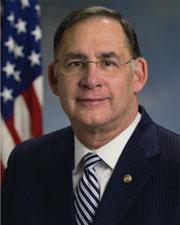
Barrasso, John
Cosponsor

Barrasso, John

Republican · WY · B001261

Joined Sep 13, 2023
Website
N/A
Office
307 Dirksen Senate Office Building Washington, DC 20510
Boozman, John
Cosponsor

Boozman, John

Republican · AR-3 · B001236

Joined Sep 13, 2023
Website
N/A
Office
555 Dirksen Senate Office Building Washington, DC 20510
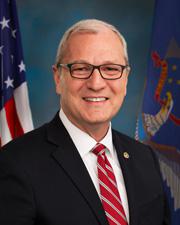
Cramer, Kevin
Cosponsor

Cramer, Kevin

Republican · ND-0 · C001096

Joined Sep 13, 2023
Website
N/A
Office
313 Hart Senate Office Building Washington, DC 20510
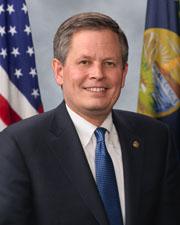
Daines, Steve
Cosponsor

Daines, Steve

Republican · MT-0 · D000618

Joined Sep 13, 2023
Website
N/A
Office
320 Hart Senate Office Building Washington, DC 20510
Lummis, Cynthia M.
Cosponsor

Lummis, Cynthia M.

Republican · WY-0 · L000571

Joined Sep 13, 2023
Website
N/A
Office
127A Russell Senate Office Building Washington, DC 20510
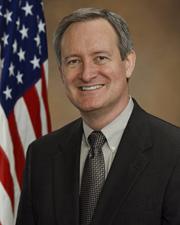
Risch, James E.
Cosponsor

Risch, James E.

Republican · ID · R000584

Joined Sep 13, 2023
Website
N/A
Office
483 Russell Senate Office Building Washington, DC 20510
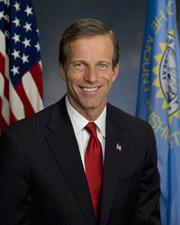
Thune, John
Cosponsor

Thune, John

Republican · SD-0 · T000250

Joined Sep 13, 2023
Website
N/A
Office
511 Dirksen Senate Office Building Washington, DC 20510
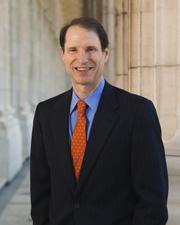
Wyden, Ron
Cosponsor

Wyden, Ron

Democratic · OR-3 · W000779

Joined Sep 13, 2023
Website
N/A
Office
221 Dirksen Senate Office Building Washington, DC 20510
Budd, Ted
Cosponsor

Budd, Ted

Republican · NC-13 · B001305

Joined May 15, 2024
Website
N/A
Office
354 Russell Senate Office Building Washington, DC 20510
Tillis, Thomas
Cosponsor

Tillis, Thomas

Republican · NC · T000476

Joined Jul 8, 2024
Website
N/A
Office
113 Dirksen Senate Office Building Washington, DC 20510
Cotton, Tom
Cosponsor

Cotton, Tom

Republican · AR-4 · C001095

Joined Jul 11, 2024
Website
N/A
Office
326 Russell Senate Office Building Washington, DC 20510

Amendments

1 amendment
118/samdt/3215 Jul 31, 2024

To improve the bill.

Amendment SA 3215 agreed to in Senate by Unanimous Consent.
Compiled bill record. Bill pages combine Congress.gov source payloads, normalized relationships, cached text analysis, vote links, and deterministic sector/signal extraction. This is not an official government record or legal advice; use the official source link when accuracy matters.