Transportation
7 evidence matches
Impact 100% Confidence 92%
Transportation and Public Works
Transportation and Public Works
Transportation safety and security
HR 8289 - 118Became Public Law No: 118-60.
Sectors are deterministic matches from official Congress.gov data and cached bill text. They are source-derived signals, not conclusions about intent or economic effect.
Evidence matches count official fields, normalized subjects, cached text snippets, or extracted entities that matched the sector rules.
Impact is a bill-level rollup used for sorting and filtering. It is not an economic impact estimate.
Confidence is the strongest individual match score behind that sector.
Evidence snippets show why a sector matched and can repeat when Congress.gov repeats the same phrase across official fields.
Transportation and Public Works
Transportation and Public Works
Transportation safety and security
Employment and training programs
Science, Space, and Technology Committee Standing House
Homeland Security Committee Standing House
Official Congressional Budget Office cost estimate links associated with this bill through Congress.gov records.
CBO estimates are official source documents with their own assumptions, scope, and publication dates. They can score a bill, a version of a bill, or a broader legislative package.
LawLinter stores the source link from Congress.gov and does not replace the CBO document. Use these cards as pointers for source review, not as independent fiscal advice.
CBO context shows source-attributed Congressional Budget Office cost estimates linked from official Congress.gov bill records. It is research context only; read the official CBO source document for assumptions, scope, and dates.
Related FEC/OpenFEC campaign-finance records for lawmakers and candidates tied to this bill through source-attributed legislative relationships. These are not donations to the bill itself.
Amounts shown here are campaign-finance totals for sponsor or cosponsor-linked candidates and their committees in the displayed FEC cycle.
They are not donations to this bill, spending on this bill, or proof that money influenced or caused sponsorship, cosponsorship, votes, or legislative outcomes.
If multiple linked lawmakers have FEC records, this section can show multiple candidate cards and separate sponsor/cosponsor rollups.
Campaign-finance context uses source-attributed FEC/OpenFEC records that are related or relevant to the displayed bill, lawmaker, candidate, committee, or legislative relationship through deterministic links. It is research context only, not proof of influence, causation, endorsement, or that money caused a sponsorship, vote, or legislative outcome.
Related LDA.gov filings where public lobbying activity descriptions reference this bill. These records are source-attributed research context, not evidence of influence or causation.
LDA filings are public lobbying disclosure records. LawLinter links them here only when the filing activity text contains an exact-looking reference to this bill.
A filing can mention many issues, clients, agencies, or bills. A match should be treated as a pointer for review, not as a conclusion about why legislation changed or how any lawmaker acted.
Lobbying context uses source-attributed LDA.gov records that appear related to this bill through bill references in public lobbying activity descriptions. It is research context only, not proof of influence, causation, endorsement, lobbying effectiveness, or legislative intent.
Airport and Airway Extension Act of 2024, Part II This act temporarily extends specific Federal Aviation Administration (FAA) programs and activities through May 17, 2024. TITLE I--FEDERAL AVIATION PROGRAMS (Sec. 101) This section extends through May 17, 2024, the Airport Improvement Program (AIP). This program provides grants for planning, development, and noise compatibility projects at or associated with certain public-use airports. This section also extends authorization through May 17, 2024, for the FAA AIP supplementary discretionary funds for grants for airport or terminal development projects. (Sec. 102) This section extends through May 17, 2024, certain expiring Department of Transportation (DOT) and FAA authorities and programs. This section extends through May 17, 2024, the authority of DOT to provide insurance and reinsurance for the federal government for risks from operating an aircraft and providing related goods or services. This section extends through May 17, 2024, the FAA's Unmanned Aircraft Systems (UAS) Test Site Program, which provides verification of the safety of public and civil UAS, operations, and related navigation procedures before their integration into the national airspace system. This section extends through May 17, 2024, the authority of DOT to provide exemptions from some requirements for UAS by using a risk-based approach to determine if certain UAS may operate safely in the national airspace system. This section extends through May 17, 2024, the FAA's airport safety and airspace hazard mitigation and enforcement program to test and evaluate technologies or systems that detect and mitigate potential aviation safety risks posed by UAS. This section extends authorization through May 17, 2024, for AIP grants for airports located in the Republic of the Marshall Islands, the Federated States of Micronesia, and the Republic of Palau. This section extends through May 17, 2024, AIP grant authorization for compatible land use planning and projects by state and local governments. Airport-compatible land uses are those that can coexist with a nearby airport without constraining the safe and efficient operation of the airport, or exposing people living or working nearby to significant environmental impacts. This section extends through May 17, 2024, authority for DOT to enter into a reimbursable agreement with the Department of Interior for the purpose of funding airport development at Midway Island Airport. This section extends through May 17, 2024, the termination date for a final order establishing mileage and adjustment eligibility under the Essential Air Service (EAS) Program using the most commonly used route between the place and the nearest medium hub airport or large hub airport. (The EAS program was established to ensure that small communities that were served by certificated air carriers before the Airline Deregulation Act of 1978 would continue to receive scheduled passenger service.) This section extends through May 17, 2024, the authority for the Aviation Consumer Protection Advisory Committee, which advises DOT in carrying out activities relating to airline customer service improvements. This section extends through May 17, 2024, the pilot program that allows AIP funds to be used for activities related to the redevelopment of airport properties. This section extends through May 17, 2024, the authority for the FAA remote tower pilot program. A remote tower is a remotely operated air navigation facility, including all necessary system components, that provides the functions and capabilities of an air traffic control tower whereby air traffic services are provided to operators at an airport from a location that may not be on or near the airport. This section extends through May 17, 2024, the authority for DOT to provide AIP grants for airport access roads in certain remote locations and for storage facilities for certain snow removal and safety equipment. This section extends through May 17, 2024, the authority for the FAA's UAS remote detection and identification pilot program. Under the program, the FAA uses available remote detection or identification technologies for safety oversight, including enforcement actions against operators of UAS that are not in compliance with federal aviation laws and regulations. This section extends through May 17, 2024, the requirement that the Aviation Consumer Advocate at DOT submit an annual report to Congress summarizing aviation consumer complaints and recommendations. This section extends through May 17, 2024, the authority for the FAA Air Carrier Access Act Advisory Committee to address the needs of passengers with disabilities. This section extends through May 17, 2024, the authority for an FAA pilot program to provide air traffic control services on a preferential basis to aircraft equipped with certain Next Generation Air Transportation System (NextGen) avionics. This section extends through May 17, 2024, competitive access disclosure requirements for AIP grant applications for large and medium hub airports. Specifically, an airport must provide assurances to DOT that it will report if it has been unable to accommodate one or more requests by an air carrier for access to gates or other facilities at that airport in order to provide service or expanded service. This section extends through May 17, 2024, authorization for the AIP non-movement area surveillance surface display systems pilot grant program. These systems use on-airport sensors to track vehicles or aircraft that are equipped with transponders on portions of the airfield surface that are not under the control of air traffic control. This section extends to May 18, 2024, a learning period (i.e., moratorium) that applies to certain DOT commercial spaceflight safety regulations governing the design or operation of a launch vehicle to protect the health and safety of crew, government astronauts, and space flight participants. This section extends through May 17, 2024, the authority of the Department of Homeland Security and the Department of Justice to take certain actions to mitigate a credible threat to certain facilities or assets from an unmanned aircraft system (UAS). These include certain facilities that are located in the United States and identified as high-risk and a potential target for unlawful UAS activity. This section extends through May 17, 2024, the moratorium on discontinuing the FAA Contract Weather Observer Program at any airport. This section extends through May 17, 2024, authorization for the FAA weather reporting programs. TITLE II--AIRPORT REVENUE PROVISIONS (Sec. 201) This section extends through May 17, 2024, the FAA's authority for expenditures from the Airport and Airway Trust Fund (AATF). The AATF is the primary funding source for all major FAA accounts that fund federal aviation programs, with the remainder coming from general fund appropriations. (Sec. 202) This section extends through May 17, 2024, the authority for the FAA to collect various taxes and fees to fund the AATF, including taxes on aviation fuel and airline tickets.
Airport and Airway Extension Act of 2024, Part II This bill temporarily extends specific Federal Aviation Administration (FAA) programs and activities through May 17, 2024. For example, the bill extends the FAA Unmanned Aircraft Systems (UAS) pilot programs (e.g., the UAS Test Site Program and the UAS remote detection and identification pilot program), weather reporting programs, and Remote Tower Pilot Program. The bill also extends the authorization for the Airport Improvement Program (AIP). (This program provides grants for planning, development, and noise compatibility projects at or associated with certain public-use airports.) Further, the bill extends through May 17, 2024, the FAA's authority for expenditures from the Airport and Airway Trust Fund (AATF) and to collect various taxes and fees to fund the AATF, including taxes on aviation fuel and airline tickets. (The AATF is the primary funding source for all major FAA accounts that fund federal aviation programs, with the remainder coming from general fund appropriations.) The bill also extends through May 17, 2024, the authority of the Department of Homeland Security and the Department of Justice to take certain actions to mitigate a credible threat to certain facilities or assets from a UAS. These include certain facilities that are located in the United States and identified as high-risk and a potential target for unlawful UAS activity.
Airport and Airway Extension Act of 2024, Part II This bill temporarily extends specific Federal Aviation Administration (FAA) programs and activities through May 17, 2024. For example, the bill extends the FAA Unmanned Aircraft Systems (UAS) pilot programs (e.g., the UAS Test Site Program and the UAS remote detection and identification pilot program), weather reporting programs, and Remote Tower Pilot Program. The bill also extends the authorization for the Airport Improvement Program (AIP). (This program provides grants for planning, development, and noise compatibility projects at or associated with certain public-use airports.) Further, the bill extends through May 17, 2024, the FAA's authority for expenditures from the Airport and Airway Trust Fund (AATF) and to collect various taxes and fees to fund the AATF, including taxes on aviation fuel and airline tickets. (The AATF is the primary funding source for all major FAA accounts that fund federal aviation programs, with the remainder coming from general fund appropriations.) The bill also extends through May 17, 2024, the authority of the Department of Homeland Security and the Department of Justice to take certain actions to mitigate a credible threat to certain facilities or assets from a UAS. These include certain facilities that are located in the United States and identified as high-risk and a potential target for unlawful UAS activity.
Airport and Airway Extension Act of 2024, Part II This bill temporarily extends specific Federal Aviation Administration (FAA) programs and activities through May 17, 2024. For example, the bill extends the FAA Unmanned Aircraft Systems (UAS) pilot programs (e.g., the UAS Test Site Program and the UAS remote detection and identification pilot program), weather reporting programs, and Remote Tower Pilot Program. The bill also extends the authorization for the Airport Improvement Program (AIP). (This program provides grants for planning, development, and noise compatibility projects at or associated with certain public-use airports.) Further, the bill extends through May 17, 2024, the FAA's authority for expenditures from the Airport and Airway Trust Fund (AATF) and to collect various taxes and fees to fund the AATF, including taxes on aviation fuel and airline tickets. (The AATF is the primary funding source for all major FAA accounts that fund federal aviation programs, with the remainder coming from general fund appropriations.) The bill also extends through May 17, 2024, the authority of the Department of Homeland Security and the Department of Justice to take certain actions to mitigate a credible threat to certain facilities or assets from a UAS. These include certain facilities that are located in the United States and identified as high-risk and a potential target for unlawful UAS activity.
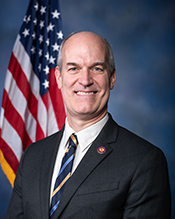
![Rep. Graves, Sam [R-MO-6]](https://www.congress.gov/img/member/g000546_200.jpg)
Message on Senate action sent to the House.
Referred to the Subcommittee on Transportation and Maritime Security.
Presented to President.
Presented to President.
Signed by President.
Signed by President.
Became Public Law No: 118-60.
Became Public Law No: 118-60.
Passed/agreed to in Senate: Passed Senate without amendment by Unanimous Consent. (consideration: CR S3665)
Passed Senate without amendment by Unanimous Consent. (consideration: CR S3665)
Introduced in House
Introduced in House
Referred to the Committee on Transportation and Infrastructure, and in addition to the Committees on Science, Space, and Technology, the Judiciary, Homeland Security, and Ways and Means, for a period to be subsequently determined by the Speaker, in each case for consideration of such provisions as fall within the jurisdiction of the committee concerned.
Mr. Graves (MO) moved to suspend the rules and pass the bill.
Considered under suspension of the rules. (consideration: CR H2968-2969)
DEBATE - The House proceeded with forty minutes of debate on H.R. 8289.
At the conclusion of debate, the Yeas and Nays were demanded and ordered. Pursuant to the provisions of clause 8, rule XX, the Chair announced that further proceedings on the motion would be postponed.
Considered as unfinished business. (consideration: CR H2978)
Passed/agreed to in House: On motion to suspend the rules and pass the bill Agreed to by the Yeas and Nays: (2/3 required): 385 - 24, 1 Present (Roll no. 187). (text: CR H2968-2969)
On motion to suspend the rules and pass the bill Agreed to by the Yeas and Nays: (2/3 required): 385 - 24, 1 Present (Roll no. 187). (text: CR H2968-2969)
Motion to reconsider laid on the table Agreed to without objection.
Received in the Senate, read twice.