Roll call 84 · Session 2 · Mar 12, 2024
On Passage Passed
217
Yea
203
Nay
0
Present
12
NV
HR 6276 - 118Received in the Senate and Read twice and referred to the Committee on Environment and Public Works.
Votes, text signals, source context, and latest movement from this record.
5 sectors · 1 CBO estimate
Received in the Senate and Read twice and referred to the Committee on Environment and Public Works.
Received in the Senate and Read twice and referred to the Committee on Environment and Public Works.
Considered under the provisions of rule H. Res. 1071. (consideration: CR H1116-1127; text: CR H1121-1122)
Rule provides for consideration of H.R. 6276 and H. Res. 1065. The resolution provides for consideration of H.R. 6276 under a structured rule with one hour of general debate and one motion to recommit. Resolution provides for consideration of H. Res. 1065 under a closed rule with one hour of general debate.
House resolved itself into the Committee of the Whole House on the state of the Union pursuant to H. Res. 1071 and Rule XVIII.
The Speaker designated the Honorable Jennifer A. Kiggans to act as Chairwoman of the Committee.
GENERAL DEBATE - The Committee of the Whole proceeded with one hour of general debate on H.R. 6276.
DEBATE - Pursuant to the provisions of H. Res. 1071, the Committee of the Whole proceeded with 10 minutes of debate on the Edwards amendment No. 1.
DEBATE - Pursuant to the provisions of H. Res. 1071, the Committee of the Whole proceeded with 10 minutes of debate on the Perry amendment No. 2.
DEBATE - Pursuant to the provisions of H. Res. 1071, the Committee of the Whole proceeded with 10 minutes of debate on the Hageman amendment No. 3.
DEBATE - Pursuant to the provisions of H. Res. 1071, the Committee of the Whole proceeded with 10 minutes of debate on the Hageman amendment No. 4.
DEBATE - Pursuant to the provisions of H. Res. 1071, the Committee of the Whole proceeded with 10 minutes of debate on the McCormick amendment No. 5.
DEBATE - Pursuant to the provisions of H. Res. 1071, the Committee of the Whole proceeded with 10 minutes of debate on the McCormick amendment No. 6.
DEBATE - Pursuant to the provisions of H. Res. 1071, the Committee of the Whole proceeded with 10 minutes of debate on the Rose amendment No. 7.
The House rose from the Committee of the Whole House on the state of the Union to report H.R. 6276.
The previous question was ordered pursuant to the rule.
The House adopted the amendments en gross as agreed to by the Committee of the Whole House on the state of the Union.
POSTPONED PROCEEDINGS - The Chair announced that pursuant to clause 1(c) of rule XIX, further proceedings on H.R. 6276 are postponed.
Pursuant to clause 1(c) of rule XIX, the House resumed consideration of H.R. 6276.
Considered as unfinished business. (consideration: CR H1131-1133)
Mr. Beyer moved to recommit to the Committee on Transportation and Infrastructure. (text: CR H1132)
The previous question on the motion to recommit was ordered pursuant to clause 2(b) of rule XIX.
On motion to recommit Failed by the Yeas and Nays: 206 - 213 (Roll no. 83).
Passed/agreed to in House: On passage Passed by recorded vote: 217 - 203 (Roll no. 84).
On passage Passed by recorded vote: 217 - 203 (Roll no. 84).
Motion to reconsider laid on the table Agreed to without objection.
The title of the measure was amended. Agreed to without objection.
The Clerk was authorized to correct section numbers, punctuation, and cross references, and to make other necessary technical and conforming corrections in the engrossment of H.R. 6276.
Rules Committee Resolution H. Res. 1071 Reported to House. Rule provides for consideration of H.R. 6276 and H. Res. 1065. The resolution provides for consideration of H.R. 6276 under a structured rule with one hour of general debate and one motion to recommit. Resolution provides for consideration of H. Res. 1065 under a closed rule with one hour of general debate.
Reported (Amended) by the Committee on Transportation and Infrastructure. H. Rept. 118-384.
Reported (Amended) by the Committee on Transportation and Infrastructure. H. Rept. 118-384.
Placed on the Union Calendar, Calendar No. 314.
Committee Consideration and Mark-up Session Held
Ordered to be Reported in the Nature of a Substitute by the Yeas and Nays: 35 - 26.
Subcommittee on Economic Development, Public Buildings, and Emergency Management Discharged
Committee Consideration and Mark-up Session Held
Referred to the Subcommittee on Economic Development, Public Buildings, and Emergency Management.
Introduced in House
Introduced in House
Referred to the House Committee on Transportation and Infrastructure.
Sectors are deterministic matches from official Congress.gov data and cached bill text. They are source-derived signals, not conclusions about intent or economic effect.
Evidence matches count official fields, normalized subjects, cached text snippets, or extracted entities that matched the sector rules.
Impact is a bill-level rollup used for sorting and filtering. It is not an economic impact estimate.
Confidence is the strongest individual match score behind that sector.
Evidence snippets show why a sector matched and can repeat when Congress.gov repeats the same phrase across official fields.
Transportation and Infrastructure Committee Standing House
t and Budget to identify the utilization rate of certain public buildings and federally mmittee-id="HPW00" Committee on Transportation and Infrastructure A BILL official-title
Administrator of General Services and the Director of the Committee on Transportation and Infrastructure _______________________________________________________________________ A BILL To direct the Administrator of General Services and the
Computers and information technology
Not later than SEC. 3. IDENTIFICATION AND DEPLOYMENT OF BUILDING USAGE TECHNOLOGY. (a) In General.--Not later than 60 days after the date of enactment of this Act, the Administrator, in coordination with the Director, shall establish standa
Not later than SEC. 3. IDENTIFICATION AND DEPLOYMENT OF BUILDING USAGE TECHNOLOGY. (a) In General.--Not later than 60 days after the date of enactment of this Act, the Administrator, in coordination with the Director, shall establish standa
Not later than with energy savings and building operations. (c) Implementation Not later than 1 year after the submission of
Not later than future savings as a result of space reductions and consolidations, including costs associated with energy savings and building operations. (c) Implementation.--Not later than 1 year after the submission of the plan under subs
Not later than with energy savings and building operations. (c) Implementation Not later than 1 year after the submission of
50 U.S.C. 3003 intelligence community has the meaning given that term in section 3 of the National Security Act of 1947 ( 50 U.S.C. 3003 ). /para
50 U.S.C. 3003 ty. (2) Intelligence community.--The term ``intelligence community'' has the meaning given that term in section 3 of the National Security Act of 1947 (50 U.S.C. 3003).
50 U.S.C. 3003 intelligence community has the meaning given that term in section 3 of the National Security Act of 1947 ( 50 U.S.C. 3003 ). /para
Administrator of General Services and the Director of the Union Calendar No. 314 118th CONGRESS 2d Session H. R. 6276 [Report No. 118-384] To direct the Administrator of General Services and the Director of the Office of Management and Budg
Official Congressional Budget Office cost estimate links associated with this bill through Congress.gov records.
CBO estimates are official source documents with their own assumptions, scope, and publication dates. They can score a bill, a version of a bill, or a broader legislative package.
LawLinter stores the source link from Congress.gov and does not replace the CBO document. Use these cards as pointers for source review, not as independent fiscal advice.
CBO context shows source-attributed Congressional Budget Office cost estimates linked from official Congress.gov bill records. It is research context only; read the official CBO source document for assumptions, scope, and dates.
Related FEC/OpenFEC campaign-finance records for lawmakers and candidates tied to this bill through source-attributed legislative relationships. These are not donations to the bill itself.
Amounts shown here are campaign-finance totals for sponsor or cosponsor-linked candidates and their committees in the displayed FEC cycle.
They are not donations to this bill, spending on this bill, or proof that money influenced or caused sponsorship, cosponsorship, votes, or legislative outcomes.
If multiple linked lawmakers have FEC records, this section can show multiple candidate cards and separate sponsor/cosponsor rollups.
Campaign-finance context uses source-attributed FEC/OpenFEC records that are related or relevant to the displayed bill, lawmaker, candidate, committee, or legislative relationship through deterministic links. It is research context only, not proof of influence, causation, endorsement, or that money caused a sponsorship, vote, or legislative outcome.
Related LDA.gov filings where public lobbying activity descriptions reference this bill. These records are source-attributed research context, not evidence of influence or causation.
LDA filings are public lobbying disclosure records. LawLinter links them here only when the filing activity text contains an exact-looking reference to this bill.
A filing can mention many issues, clients, agencies, or bills. A match should be treated as a pointer for review, not as a conclusion about why legislation changed or how any lawmaker acted.
Lobbying context uses source-attributed LDA.gov records that appear related to this bill through bill references in public lobbying activity descriptions. It is research context only, not proof of influence, causation, endorsement, lobbying effectiveness, or legislative intent.
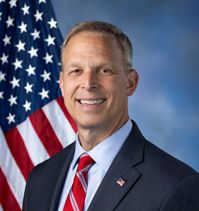
An amendment numbered 1 printed in House Report 118-419 to require certain data collection and reporting on space utilization, occupancy, and availability of office space leased by an Executive agency.
On agreeing to the Edwards amendment (A001) Agreed to by voice vote.
An amendment numbered 2 printed in House Report 118-419 to redefine occupancy to include the total number of employees actually performing duties in person in a public building or federally-leased space 40 hours per week.
On agreeing to the Perry amendment (A002) Agreed to by voice vote.
An amendment numbered 3 printed in House Report 118-419 to require federal agencies to report to Congress on whether occupancy and utilization rates are affected by an agency's remote work and telework policies.
On agreeing to the Hageman amendment (A003) Agreed to by voice vote.
An amendment numbered 4 printed in House Report 118-419 to include employee badge swipe data as a tool for measuring the utilization of public buildings and federally leased spaces.
On agreeing to the Hageman amendment (A004) Agreed to by voice vote.
An amendment numbered 5 printed in House Report 118-419 to require the bill's annual report on the usage of real property be made publicly available on an accessible website run by the General Services Administration with exceptions for national security.
On agreeing to the McCormick amendment (A005) Agreed to by voice vote.
An amendment numbered 6 printed in House Report 118-419 to require the Government Accountability Office to report on the cost of conducting the survey and monitoring every federal building's occupancy for a year (including installing sensors in every office of every federal building nationwide).
On agreeing to the McCormick amendment (A006) Agreed to by voice vote.
An amendment numbered 7 printed in House Report 118-419 to require federal agencies to report public buildings or federally-leased spaces with a capacity of 500 or more employees and a utilization rate below 20 percent to their inspector general for investigation.
On agreeing to the Rose amendment (A007) Agreed to by voice vote.