Defense
7 evidence matches
Impact 100% Confidence 92%
Armed Forces and National Security
Armed Forces and National Security
Armed Forces and National Security
HR 8247 - 116Became Public Law No: 116-214.
Sectors are deterministic matches from official Congress.gov data and cached bill text. They are source-derived signals, not conclusions about intent or economic effect.
Evidence matches count official fields, normalized subjects, cached text snippets, or extracted entities that matched the sector rules.
Impact is a bill-level rollup used for sorting and filtering. It is not an economic impact estimate.
Confidence is the strongest individual match score behind that sector.
Evidence snippets show why a sector matched and can repeat when Congress.gov repeats the same phrase across official fields.
Armed Forces and National Security
Armed Forces and National Security
Armed Forces and National Security
Health care coverage and access
Health information and medical records
Health promotion and preventive care
Medical education
Transportation programs funding
Women's employment
Veterans' loans, housing, homeless programs
Official Congressional Budget Office cost estimate links associated with this bill through Congress.gov records.
CBO estimates are official source documents with their own assumptions, scope, and publication dates. They can score a bill, a version of a bill, or a broader legislative package.
LawLinter stores the source link from Congress.gov and does not replace the CBO document. Use these cards as pointers for source review, not as independent fiscal advice.
CBO context shows source-attributed Congressional Budget Office cost estimates linked from official Congress.gov bill records. It is research context only; read the official CBO source document for assumptions, scope, and dates.
Related FEC/OpenFEC campaign-finance records for lawmakers and candidates tied to this bill through source-attributed legislative relationships. These are not donations to the bill itself.
Amounts shown here are campaign-finance totals for sponsor or cosponsor-linked candidates and their committees in the displayed FEC cycle.
They are not donations to this bill, spending on this bill, or proof that money influenced or caused sponsorship, cosponsorship, votes, or legislative outcomes.
If multiple linked lawmakers have FEC records, this section can show multiple candidate cards and separate sponsor/cosponsor rollups.
Campaign-finance context uses source-attributed FEC/OpenFEC records that are related or relevant to the displayed bill, lawmaker, candidate, committee, or legislative relationship through deterministic links. It is research context only, not proof of influence, causation, endorsement, or that money caused a sponsorship, vote, or legislative outcome.
Related LDA.gov filings where public lobbying activity descriptions reference this bill. These records are source-attributed research context, not evidence of influence or causation.
LDA filings are public lobbying disclosure records. LawLinter links them here only when the filing activity text contains an exact-looking reference to this bill.
A filing can mention many issues, clients, agencies, or bills. A match should be treated as a pointer for review, not as a conclusion about why legislation changed or how any lawmaker acted.
Lobbying context uses source-attributed LDA.gov records that appear related to this bill through bill references in public lobbying activity descriptions. It is research context only, not proof of influence, causation, endorsement, lobbying effectiveness, or legislative intent.
Veterans Comprehensive Prevention, Access to Care, and Treatment Act of 2020 or the Veterans COMPACT Act of 2020 This bill implements programs, policies, and reports related to Department of Veterans Affairs (VA) transition assistance, suicide care, mental health education and treatment, health care, and women veteran care. (Sec. 101) This section requires the VA to carry out a two-year pilot program on information sharing between the VA and designated persons regarding the assistance and benefits available to veterans. (Sec. 102) The VA must annually report (for a period of five years) on its Solid Start program, which is an outreach program for those in their first year of separation from the military. The report must exclude any personally identifiable information regarding a veteran. (Sec. 201) The VA must furnish or pay for emergent suicide care, including transportation costs, at a VA or non-VA facility for certain veterans. The bill requires the VA to ensure certain notification procedures occur in relation to veterans receiving emergent suicide care. The VA must determine the eligibility of individuals receiving emergent suicide care for other VA programs and benefits. Additionally, the VA must make referrals, as appropriate, for care following the period of emergent suicide care. (Sec. 202) The VA must establish a four-year education program for the education and training of caregivers and family members of veterans with mental health disorders. (Sec. 203) This section requires the VA to establish the Task Force on Outdoor Recreation for Veterans to report on and make recommendations regarding the use of public lands or other outdoor spaces for medical treatment and therapy for veterans. (Sec. 204) The VA must seek to contact covered veterans to encourage them to receive comprehensive physical, mental health, eye, and audiological examinations. A covered veteran is a veteran who is enrolled in the VA health care system and has not received health care furnished or paid for by the VA in the past two years. Under the bill, if a covered veteran elects to receive more than one of the comprehensive examinations at a VA health care facility, the VA shall seek to furnish all such examinations on the same day. A covered veteran may also receive an examination from another specified health care provider. The bill provides that the VA may pay for a rural covered veteran to travel to a health care facility to receive a comprehensive examination. The VA shall seek to enter into agreements with nonprofit organizations to provide shuttle service to rural covered veterans for such examinations. (Sec. 205) The VA must provide its police officers with annual training on the prevention of suicide among the population it serves. Each police force of a VA facility must develop a plan to enter into partnerships with local community mental health organizations and experts, local community veterans organizations, local community criminal justice organizations and experts, and local police departments. (Sec. 301) The VA must complete an analysis and report on its programs that provide assistance to women veterans who are homeless or precariously housed to identify the areas in which such programs are failing to meet the needs of such women. (Sec. 302) The VA must annually report on the use of VA health care by women veterans.
Veterans Comprehensive Prevention, Access to Care, and Treatment Act of 2020 or the Veterans COMPACT Act of 2020 This bill implements programs, policies, and reports related to Department of Veterans Affairs (VA) transition assistance, suicide care, mental health education and treatment, health care, and women veteran care. Among other requirements, the VA must carry out a pilot program on information sharing between the VA and designated persons regarding the assistance and benefits available to veterans; furnish, reimburse, or pay for emergent suicide care, including transportation costs, at a VA or non-VA facility for certain veterans who are in an acute suicidal crisis; establish a program for the education and training of caregivers and family members of veterans with mental health disorders; establish the Task Force on Outdoor Recreation for Veterans to make recommendations regarding the use of public lands or other outdoor spaces for medical treatment and therapy for certain veterans; seek to contact certain veterans who have not recently received care to encourage them to receive comprehensive physical, mental health, eye, and audiological examinations; provide VA police officers with annual training on the prevention of suicide among the population it serves; complete an analysis and report on its programs that provide assistance to women veterans who are homeless or precariously housed to identify the areas in which such programs are failing to meet the needs of such women; and annually report on the use of VA health care by women veterans.
Veterans Comprehensive Prevention, Access to Care, and Treatment Act of 2020 or the Veterans COMPACT Act of 2020 This bill implements programs, policies, and reports related to Department of Veterans Affairs (VA) transition assistance, suicide care, mental health education and treatment, health care, and women veteran care. Among other requirements, the VA must carry out a pilot program on information sharing between the VA and designated persons regarding the assistance and benefits available to veterans; furnish, reimburse, or pay for emergent suicide care, including transportation costs, at a VA or non-VA facility for certain veterans who are in an acute suicidal crisis; establish a program for the education and training of caregivers and family members of veterans with mental health disorders; establish the Task Force on Outdoor Recreation for Veterans to make recommendations regarding the use of public lands or other outdoor spaces for medical treatment and therapy for certain veterans; seek to contact certain veterans who have not recently received care to encourage them to receive comprehensive physical, mental health, eye, and audiological examinations; provide VA police officers with annual training on the prevention of suicide among the population it serves; complete an analysis and report on its programs that provide assistance to women veterans who are homeless or precariously housed to identify the areas in which such programs are failing to meet the needs of such women; and annually report on the use of VA health care by women veterans.
Veterans Comprehensive Prevention, Access to Care, and Treatment Act of 2020 or the Veterans COMPACT Act of 2020 This bill implements programs, policies, and reports related to Department of Veterans Affairs (VA) transition assistance, suicide care, mental health education and treatment, health care, and women veteran care. Among other requirements, the VA must carry out a pilot program on information sharing between the VA and designated persons regarding the assistance and benefits available to veterans; furnish or pay for emergent suicide care, including transportation costs, at a VA or non-VA facility for certain veterans who are in an acute suicidal crisis; establish a program for the education and training of caregivers and family members of veterans with mental health disorders; establish the Task Force on Outdoor Recreation for Veterans to make recommendations regarding the use of public lands or other outdoor spaces for medical treatment and therapy for certain veterans; seek to contact certain veterans who have not recently received care to encourage them to receive comprehensive physical, mental health, eye, and audiological examinations; provide VA police officers with annual training on the prevention of suicide among the population it serves; complete an analysis and report on its programs that provide assistance to women veterans who are homeless or precariously housed to identify the areas in which such programs are failing to meet the needs of such women; and annually report on the use of VA health care by women veterans.
Signed by President.
Signed by President.
Became Public Law No: 116-214.
Became Public Law No: 116-214.
Presented to President.
Presented to President.
Message on Senate action sent to the House.
Passed/agreed to in Senate: Passed Senate without amendment by Unanimous Consent.(consideration: CR S6655)
Passed Senate without amendment by Unanimous Consent. (consideration: CR S6655)
Received in the Senate, read twice.
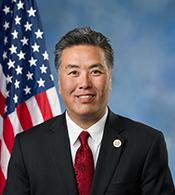
Mr. Takano moved to suspend the rules and pass the bill, as amended.
Considered under suspension of the rules. (consideration: CR H4763-4770)
DEBATE - The House proceeded with forty minutes of debate on H.R. 8247.
Passed/agreed to in House: On motion to suspend the rules and pass the bill, as amended Agreed to by voice vote.(text: CR H4763-4767)
On motion to suspend the rules and pass the bill, as amended Agreed to by voice vote. (text: CR H4763-4767)
Motion to reconsider laid on the table Agreed to without objection.
Subcommittee Consideration and Mark-up Session Held.
Ordered to be Reported (Amended) by Voice Vote.
Committee Consideration and Mark-up Session Held.
Referred to the Subcommittee on Health.
Introduced in House
Introduced in House
Referred to the House Committee on Veterans' Affairs.