Back to search
HR 4661 - 115

United States Fire Administration, AFG, and SAFER Program Reauthorization Act of 2017

Became Public Law No: 115-98.

Bill highlights

Votes, text signals, source context, and latest movement from this record.

Bill Text Stats

8
Analyzed sections
$2.8M
Detected dollar total
0
Tax signals
4
Deadlines

Signal counts

Tax density 0.0%
Spending density 37.5%
Statutory Reference 16
Amendments 8
Agency 7
Benefits 5
Deadline 4
Grants 3
Spending 3

Top agencies

Administrator of the Federal Emergency 2
Administrator of the 1
Administrator of the Federal 1
Administrator of the Federal Emergency Management Agency 1
Administrator of the United States 1
Agency shall 1

Statutory references

15 U.S.C. 2229 4
15 U.S.C. 2229a 3
15 U.S.C. 2229a 2
15 USC 2201 1
15 U.S.C. 2216 1
15 U.S.C. 2229 1
15 USC 2229 1
15 U.S.C. 2229a 1

House Votes

No House roll call votes have been linked to this bill yet.

Timeline

Jan 3, 2018

Signed by President.

Jan 3, 2018

Signed by President.

Jan 3, 2018

Became Public Law No: 115-98.

Jan 3, 2018

Became Public Law No: 115-98.

Jan 2, 2018

Presented to President.

Jan 2, 2018

Presented to President.

Dec 22, 2017

Message on Senate action sent to the House.

Dec 21, 2017

Passed/agreed to in Senate: Passed Senate without amendment by Unanimous Consent.(consideration: CR S8280)

Dec 21, 2017

Passed Senate without amendment by Unanimous Consent. (consideration: CR S8280)

Dec 19, 2017

Received in the Senate, read twice.

Dec 18, 2017

Mrs. Comstock moved to suspend the rules and pass the bill.

Dec 18, 2017

Considered under suspension of the rules. (consideration: CR H10155-10158)

Dec 18, 2017

DEBATE - The House proceeded with forty minutes of debate on H.R. 4661.

Dec 18, 2017

Passed/agreed to in House: On motion to suspend the rules and pass the bill Agreed to by voice vote.(text: CR H10155-10156)

Dec 18, 2017

On motion to suspend the rules and pass the bill Agreed to by voice vote. (text: CR H10155-10156)

Dec 18, 2017

Motion to reconsider laid on the table Agreed to without objection.

Dec 15, 2017

Introduced in House

Dec 15, 2017

Introduced in House

Dec 15, 2017

Referred to the House Committee on Science, Space, and Technology.

Affected Sectors

How to read this

Sectors are deterministic matches from official Congress.gov data and cached bill text. They are source-derived signals, not conclusions about intent or economic effect.

Evidence matches count official fields, normalized subjects, cached text snippets, or extracted entities that matched the sector rules.

Impact is a bill-level rollup used for sorting and filtering. It is not an economic impact estimate.

Confidence is the strongest individual match score behind that sector.

Evidence snippets show why a sector matched and can repeat when Congress.gov repeats the same phrase across official fields.

Finance and banking
14 evidence matches
Impact 99% Confidence 78%

. 2229 and 2229a). (b) Requirements.--The Administrator of the Federal Emergency Management Agency shall ensure that any training developed and made available under subsection (a) is-- (1) tailored to the financial and time constraints of m

equirements.--The Administrator of the Federal Emergency Management Agency shall ensure that any training developed and made available under subsection (a) is-- (1) tailored to the financial and time constraints of members of the fire and e

. 2229 and 2229a). (b) Requirements.--The Administrator of the Federal Emergency Management Agency shall ensure that any training developed and made available under subsection (a) is-- (1) tailored to the financial and time constraints of m

Healthcare
1 evidence matches
Impact 91% Confidence 85%

Mental health

Transportation
1 evidence matches
Impact 91% Confidence 85%

Transportation and Infrastructure Committee Standing House

Defense
2 evidence matches
Impact 89% Confidence 80%

Department of Homeland Security

Homeland Security Committee Standing House

CBO Cost Estimates

Official Congressional Budget Office cost estimate links associated with this bill through Congress.gov records.

How to read this

CBO estimates are official source documents with their own assumptions, scope, and publication dates. They can score a bill, a version of a bill, or a broader legislative package.

LawLinter stores the source link from Congress.gov and does not replace the CBO document. Use these cards as pointers for source review, not as independent fiscal advice.

CBO context shows source-attributed Congressional Budget Office cost estimates linked from official Congress.gov bill records. It is research context only; read the official CBO source document for assumptions, scope, and dates.

No CBO cost estimate is currently linked for this bill.

Campaign Finance Context

Related FEC/OpenFEC campaign-finance records for lawmakers and candidates tied to this bill through source-attributed legislative relationships. These are not donations to the bill itself.

How to read this

Amounts shown here are campaign-finance totals for sponsor or cosponsor-linked candidates and their committees in the displayed FEC cycle.

They are not donations to this bill, spending on this bill, or proof that money influenced or caused sponsorship, cosponsorship, votes, or legislative outcomes.

If multiple linked lawmakers have FEC records, this section can show multiple candidate cards and separate sponsor/cosponsor rollups.

Campaign-finance context uses source-attributed FEC/OpenFEC records that are related or relevant to the displayed bill, lawmaker, candidate, committee, or legislative relationship through deterministic links. It is research context only, not proof of influence, causation, endorsement, or that money caused a sponsorship, vote, or legislative outcome.

No FEC/OpenFEC campaign-finance context is currently linked for this bill.

Lobbying Context

Related LDA.gov filings where public lobbying activity descriptions reference this bill. These records are source-attributed research context, not evidence of influence or causation.

How to read this

LDA filings are public lobbying disclosure records. LawLinter links them here only when the filing activity text contains an exact-looking reference to this bill.

A filing can mention many issues, clients, agencies, or bills. A match should be treated as a pointer for review, not as a conclusion about why legislation changed or how any lawmaker acted.

Lobbying context uses source-attributed LDA.gov records that appear related to this bill through bill references in public lobbying activity descriptions. It is research context only, not proof of influence, causation, endorsement, lobbying effectiveness, or legislative intent.
No LDA.gov lobbying disclosure context is currently linked for this bill.

Summary

49 Public Law Jan 9, 2018

(This measure has not been amended since it was introduced. The expanded summary of the House passed version is repeated here.) United States Fire Administration, AFG, and SAFER Program Reauthorization Act of 2017 This bill amends the the Federal Fire Prevention and Control Act of 1974 to: (1) reauthorize through FY2024 the Assistance to Firefighters Grants (AFG) Program, the Fire Prevention and Safety Grants (FPSG) Program, and the Staffing for Adequate Fire and Emergency Response Grant (SAFER) Program, and reauthorizes provisions regarding firefighting technology evaluation and standards development; and (2) authorize the use of AFG Program grants, instead of SAFER Program grants, to provide specialized training to first responders on how to recognize and properly intervene with individuals with mental illness. The SAFER Program is revised to permit the use of grants to change the status of part-time or paid-on-call firefighters to full-time firefighters. The United States Fire Administration (USFA) may develop and make widely available an electronic, online training course for members of the fire and emergency response community on matters related to the administration of AFG, FPSG, and SAFER grants. The Federal Emergency Management Agency (FEMA) shall ensure that any such training is: (1) tailored to the financial and time constraints of members of the fire and emergency response community; and (2) accessible to all individuals in the career, combination, paid-on-call, and volunteer fire and emergency response community. The USFA shall develop and implement a grant monitoring and oversight framework to mitigate and minimize risks of fraud, waste, abuse, and mismanagement relating to such grants programs.

82 Passed Senate without amendment Jan 9, 2018

(This measure has not been amended since it was introduced. The expanded summary of the House passed version is repeated here.) United States Fire Administration, AFG, and SAFER Program Reauthorization Act of 2017 This bill amends the the Federal Fire Prevention and Control Act of 1974 to: (1) reauthorize through FY2024 the Assistance to Firefighters Grants (AFG) Program, the Fire Prevention and Safety Grants (FPSG) Program, and the Staffing for Adequate Fire and Emergency Response Grant (SAFER) Program, and reauthorizes provisions regarding firefighting technology evaluation and standards development; and (2) authorize the use of AFG Program grants, instead of SAFER Program grants, to provide specialized training to first responders on how to recognize and properly intervene with individuals with mental illness. The SAFER Program is revised to permit the use of grants to change the status of part-time or paid-on-call firefighters to full-time firefighters. The United States Fire Administration (USFA) may develop and make widely available an electronic, online training course for members of the fire and emergency response community on matters related to the administration of AFG, FPSG, and SAFER grants. The Federal Emergency Management Agency (FEMA) shall ensure that any such training is: (1) tailored to the financial and time constraints of members of the fire and emergency response community; and (2) accessible to all individuals in the career, combination, paid-on-call, and volunteer fire and emergency response community. The USFA shall develop and implement a grant monitoring and oversight framework to mitigate and minimize risks of fraud, waste, abuse, and mismanagement relating to such grants programs.

81 Passed House without amendment Jan 9, 2018

(This measure has not been amended since it was introduced. The summary has been expanded because action occurred on the measure.) United States Fire Administration, AFG, and SAFER Program Reauthorization Act of 2017 (Sec. 2) This bill amends the the Federal Fire Prevention and Control Act of 1974 to: (1) reauthorize through FY2024 the Assistance to Firefighters Grants (AFG) Program, the Fire Prevention and Safety Grants (FPSG) Program, and the Staffing for Adequate Fire and Emergency Response Grant (SAFER) Program, and reauthorizes provisions regarding technology evaluation and standards development; and (2) authorize the use of AFG Program grants, instead of SAFER Program grants, to provide specialized training to first responders on how to recognize and properly intervene with individuals with mental illness. The SAFER Program is revised to permit the use of grants to change the status of part-time or paid-on-call firefighters to full-time firefighters. (Sec. 5) The United States Fire Administration (USFA) may develop and make widely available an electronic, online training course for members of the fire and emergency response community on matters related to the administration of AFG, FPSG, and SAFER grants. The Federal Emergency Management Agency (FEMA) shall ensure that any such training is: (1) tailored to the financial and time constraints of members of the fire and emergency response community; and (2) accessible to all individuals in the career, combination, paid-on-call, and volunteer fire and emergency response community. (Sec. 6) The USFA shall develop and implement a grant monitoring and oversight framework to mitigate and minimize risks of fraud, waste, abuse, and mismanagement relating to such grants programs.

00 Introduced in House Jan 9, 2018

United States Fire Administration, AFG, and SAFER Program Reauthorization Act of 2017 This bill amends the the Federal Fire Prevention and Control Act of 1974 to: (1) reauthorize through FY2024 the Assistance to Firefighters Grants (AFG) Program, the Fire Prevention and Safety Grants (FPSG) Program, and the Staffing for Adequate Fire and Emergency Response Grant (SAFER) Program, and reauthorizes provisions regarding firefighting technology evaluation and standards development; and (2) authorize the use of AFG Program grants, instead of SAFER Program grants, to provide specialized training to first responders on how to recognize and properly intervene with individuals with mental illness. The SAFER Program is revised to permit the use of grants to change the status of part-time or paid-on-call firefighters to full-time firefighters. The United States Fire Administration (USFA) may develop and make widely available an electronic, online training course for members of the fire and emergency response community on matters related to the administration of AFG, FPSG, and SAFER grants. The Federal Emergency Management Agency (FEMA) shall ensure that any such training is: (1) tailored to the financial and time constraints of members of the fire and emergency response community; and (2) accessible to all individuals in the career, combination, paid-on-call, and volunteer fire and emergency response community. The USFA shall develop and implement a grant monitoring and oversight framework to mitigate and minimize risks of fraud, waste, abuse, and mismanagement relating to such grants programs.

Sponsors

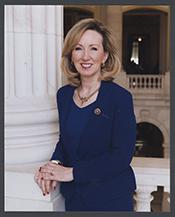
Comstock, Barbara
Sponsor

Comstock, Barbara

Republican · VA-10 · C001105

Joined Dec 15, 2017
Website
N/A
Phone
N/A
Office
N/A
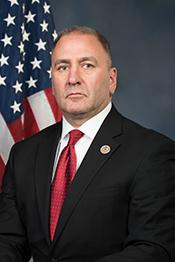
Higgins, Clay
Cosponsor

Higgins, Clay

Republican · LA-3 · H001077

Joined Dec 18, 2017
Website
N/A
Office
572 Cannon House Office Building
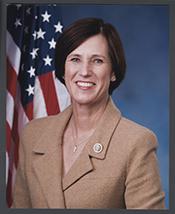
Walters, Mimi
Cosponsor

Walters, Mimi

Republican · CA-45 · W000820

Joined Dec 18, 2017
Website
N/A
Phone
N/A
Office
N/A

Amendments

No amendment records are currently available for this bill.
Compiled bill record. Bill pages combine Congress.gov source payloads, normalized relationships, cached text analysis, vote links, and deterministic sector/signal extraction. This is not an official government record or legal advice; use the official source link when accuracy matters.