Back to search
HJRES 67 - 115

Disapproving the rule submitted by the Department of Labor relating to savings arrangements established by qualified State political subdivisions for non-governmental employees.

Became Public Law No: 115-24.

Bill highlights

Votes, text signals, source context, and latest movement from this record.

Bill Text Stats

1
Analyzed sections
N/A
Detected dollar total
0
Tax signals
0
Deadlines

Signal counts

Tax density 0.0%
Spending density 0.0%
Statutory Reference 1

Top agencies

N/A

Statutory references

Public Law 115-24 1

House Votes

Roll call 95 · Session 1 · Feb 15, 2017
Passed

Timeline

Apr 13, 2017

Signed by President.

Apr 13, 2017

Signed by President.

Apr 13, 2017

Became Public Law No: 115-24.

Apr 13, 2017

Became Public Law No: 115-24.

Apr 5, 2017

Presented to President.

Apr 5, 2017

Presented to President.

Mar 30, 2017

Considered by Senate.

Mar 30, 2017

Passed/agreed to in Senate: Passed Senate without amendment by Yea-Nay Vote. 50 - 49. Record Vote Number: 99.(consideration: CR S2121-2122)

Mar 30, 2017

Passed Senate without amendment by Yea-Nay Vote. 50 - 49. Record Vote Number: 99. (consideration: CR S2121-2122)

Mar 30, 2017

Message on Senate action sent to the House.

Mar 29, 2017

Motion to proceed to consideration of measure agreed to in Senate by Voice Vote. (consideration: CR S2055)

Mar 29, 2017

Measure laid before Senate by motion. (consideration: CR S2055-2096)

Feb 16, 2017

Received in the Senate, read twice.

Feb 15, 2017

Considered under the provisions of rule H. Res. 116. (consideration: CR H1218-1221))

Feb 15, 2017

Rule provides for consideration of H.J. Res. 66 and H.J. Res. 67. Each joint resolution shall be considered as read. All points of order against provisions in each joint resolution are waived. The previous question shall be considered as ordered on each joint resolution without intervening motion except one hour of debate and one motion to recommit.

Feb 15, 2017

DEBATE - The House proceeded with one hour of debate on H.J. Res. 67.

Feb 15, 2017

The previous question was ordered pursuant to the rule.

Feb 15, 2017

POSTPONED PROCEEDINGS - At the conclusion of debate on H.J. Res. 67, the Chair put the question on passage and by voice vote, announced that the ayes had prevailed. Ms. Bonamici demanded the yeas and nays and the Chair postponed further proceedings on passage until a time to be announced.

Feb 15, 2017

Considered as unfinished business. (consideration: CR H1221)

Feb 15, 2017

Passed/agreed to in House: On passage Passed by the Yeas and Nays: 234 - 191 (Roll no. 95).(text: CR H1218)

Feb 15, 2017

On passage Passed by the Yeas and Nays: 234 - 191 (Roll no. 95). (text: CR H1218)

Feb 15, 2017

Motion to reconsider laid on the table Agreed to without objection.

Feb 14, 2017

Rule H. Res. 116 passed House.

Feb 13, 2017

Rules Committee Resolution H. Res. 116 Reported to House. Rule provides for consideration of H.J. Res. 66 and H.J. Res. 67. Each joint resolution shall be considered as read. All points of order against provisions in each joint resolution are waived. The previous question shall be considered as ordered on each joint resolution without intervening motion except one hour of debate and one motion to recommit.

Feb 7, 2017

Introduced in House

Feb 7, 2017

Introduced in House

Feb 7, 2017

Referred to the House Committee on Education and the Workforce.

Affected Sectors

How to read this

Sectors are deterministic matches from official Congress.gov data and cached bill text. They are source-derived signals, not conclusions about intent or economic effect.

Evidence matches count official fields, normalized subjects, cached text snippets, or extracted entities that matched the sector rules.

Impact is a bill-level rollup used for sorting and filtering. It is not an economic impact estimate.

Confidence is the strongest individual match score behind that sector.

Evidence snippets show why a sector matched and can repeat when Congress.gov repeats the same phrase across official fields.

Labor and employment
8 evidence matches
Impact 100% Confidence 90%

Labor and Employment

Labor and Employment

Labor and Employment

Education
1 evidence matches
Impact 91% Confidence 85%

Education and Workforce Committee Standing House

CBO Cost Estimates

Official Congressional Budget Office cost estimate links associated with this bill through Congress.gov records.

How to read this

CBO estimates are official source documents with their own assumptions, scope, and publication dates. They can score a bill, a version of a bill, or a broader legislative package.

LawLinter stores the source link from Congress.gov and does not replace the CBO document. Use these cards as pointers for source review, not as independent fiscal advice.

CBO context shows source-attributed Congressional Budget Office cost estimates linked from official Congress.gov bill records. It is research context only; read the official CBO source document for assumptions, scope, and dates.

No CBO cost estimate is currently linked for this bill.

Campaign Finance Context

Related FEC/OpenFEC campaign-finance records for lawmakers and candidates tied to this bill through source-attributed legislative relationships. These are not donations to the bill itself.

How to read this

Amounts shown here are campaign-finance totals for sponsor or cosponsor-linked candidates and their committees in the displayed FEC cycle.

They are not donations to this bill, spending on this bill, or proof that money influenced or caused sponsorship, cosponsorship, votes, or legislative outcomes.

If multiple linked lawmakers have FEC records, this section can show multiple candidate cards and separate sponsor/cosponsor rollups.

Campaign-finance context uses source-attributed FEC/OpenFEC records that are related or relevant to the displayed bill, lawmaker, candidate, committee, or legislative relationship through deterministic links. It is research context only, not proof of influence, causation, endorsement, or that money caused a sponsorship, vote, or legislative outcome.

No FEC/OpenFEC campaign-finance context is currently linked for this bill.

Lobbying Context

Related LDA.gov filings where public lobbying activity descriptions reference this bill. These records are source-attributed research context, not evidence of influence or causation.

How to read this

LDA filings are public lobbying disclosure records. LawLinter links them here only when the filing activity text contains an exact-looking reference to this bill.

A filing can mention many issues, clients, agencies, or bills. A match should be treated as a pointer for review, not as a conclusion about why legislation changed or how any lawmaker acted.

Lobbying context uses source-attributed LDA.gov records that appear related to this bill through bill references in public lobbying activity descriptions. It is research context only, not proof of influence, causation, endorsement, lobbying effectiveness, or legislative intent.

No LDA.gov lobbying disclosure context is currently linked for this bill.

Summary

49 Public Law Apr 18, 2017

(This measure has not been amended since it was introduced. The summary of that version is repeated here.) This joint resolution nullifies a rule submitted by the Department of Labor's Employee Benefits Security Administration regarding savings arrangements established by qualified state political subdivisions for non-governmental employees. (The rule amends a final regulation that describes how states may design and operate payroll deduction savings programs for private-sector employees, including programs that use automatic enrollment, without causing the states or private-sector employers to have established employee pension benefit plans under the Employee Retirement Income Security Act of 1974 [ERISA]. The amendment expands the regulation beyond states to cover qualified state political subdivisions and their programs that otherwise comply with the regulation.)

82 Passed Senate without amendment Apr 18, 2017

(This measure has not been amended since it was introduced. The summary of that version is repeated here.) This joint resolution nullifies a rule submitted by the Department of Labor's Employee Benefits Security Administration regarding savings arrangements established by qualified state political subdivisions for non-governmental employees. (The rule amends a final regulation that describes how states may design and operate payroll deduction savings programs for private-sector employees, including programs that use automatic enrollment, without causing the states or private-sector employers to have established employee pension benefit plans under the Employee Retirement Income Security Act of 1974 [ERISA]. The amendment expands the regulation beyond states to cover qualified state political subdivisions and their programs that otherwise comply with the regulation.)

81 Passed House without amendment Mar 1, 2017

(This measure has not been amended since it was introduced. The summary of that version is repeated here.) This joint resolution nullifies a rule submitted by the Department of Labor's Employee Benefits Security Administration regarding savings arrangements established by qualified state political subdivisions for non-governmental employees. (The rule amends a final regulation that describes how states may design and operate payroll deduction savings programs for private-sector employees, including programs that use automatic enrollment, without causing the states or private-sector employers to have established employee pension benefit plans under the Employee Retirement Income Security Act of 1974 [ERISA]. The amendment expands the regulation beyond states to cover qualified state political subdivisions and their programs that otherwise comply with the regulation.)

00 Introduced in House Feb 15, 2017

This joint resolution nullifies a rule submitted by the Department of Labor's Employee Benefits Security Administration regarding savings arrangements established by qualified state political subdivisions for non-governmental employees. (The rule amends a final regulation that describes how states may design and operate payroll deduction savings programs for private-sector employees, including programs that use automatic enrollment, without causing the states or private-sector employers to have established employee pension benefit plans under the Employee Retirement Income Security Act of 1974 [ERISA]. The amendment expands the regulation beyond states to cover qualified state political subdivisions and their programs that otherwise comply with the regulation.)

Sponsors

Foxx, Virginia
Cosponsor

Foxx, Virginia

Republican · NC-5 · F000450

Joined Feb 7, 2017
Website
N/A
Office
2462 Rayburn House Office Building
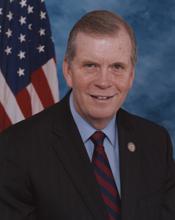
Walberg, Tim
Cosponsor

Walberg, Tim

Republican · MI-5 · W000798

Joined Feb 7, 2017
Website
N/A
Office
2266 Rayburn House Office Building
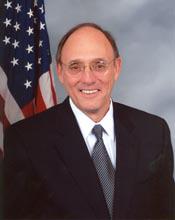
Sessions, Pete
Cosponsor

Sessions, Pete

Republican · TX-17 · S000250

Joined Feb 13, 2017
Website
N/A
Office
2204 Rayburn House Office Building
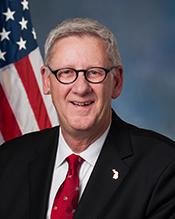
Mitchell, Paul
Cosponsor

Mitchell, Paul

Republican · MI-10 · M001201

Joined Feb 15, 2017
Website
N/A
Phone
N/A
Office
N/A
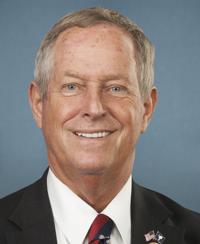
Wilson, Joe
Cosponsor

Wilson, Joe

Republican · SC-2 · W000795

Joined Feb 15, 2017
Website
N/A
Office
1436 Longworth House Office Building

Amendments

No amendment records are currently available for this bill.
Compiled bill record. Bill pages combine Congress.gov source payloads, normalized relationships, cached text analysis, vote links, and deterministic sector/signal extraction. This is not an official government record or legal advice; use the official source link when accuracy matters.