Back to search

Bill Text Stats

5
Analyzed sections
N/A
Detected dollar total
0
Tax signals
2
Deadlines

Signal counts

Tax density 0.0%
Spending density 0.0%
Statutory Reference 4
Benefits 2
Deadline 2
Studies 2
Agency 1

Top agencies

Secretary of Health and Human Services 1

Statutory references

25 U.S.C. 450b 1
42 USC 201 1
42 USC 247b-13 1
Public Law 114-91 1

House Votes

No House roll call votes have been linked to this bill yet.

Timeline

Nov 25, 2015

Signed by President.

Nov 25, 2015

Signed by President.

Nov 25, 2015

Became Public Law No: 114-91.

Nov 25, 2015

Became Public Law No: 114-91.

Nov 19, 2015

Presented to President.

Nov 19, 2015

Presented to President.

Nov 16, 2015

Mr. Pitts moved to suspend the rules and pass the bill.

Nov 16, 2015

Considered under suspension of the rules. (consideration: CR H8180-8182)

Nov 16, 2015

DEBATE - The House proceeded with forty minutes of debate on S. 799.

Nov 16, 2015

Passed/agreed to in House: On motion to suspend the rules and pass the bill Agreed to by voice vote.(text: CR H8180)

Nov 16, 2015

On motion to suspend the rules and pass the bill Agreed to by voice vote. (text: CR H8180)

Nov 16, 2015

Motion to reconsider laid on the table Agreed to without objection.

Oct 22, 2015

Passed/agreed to in Senate: Passed Senate with an amendment and an amendment to the Title by Unanimous Consent.(consideration: CR S7439-7441; text as passed Senate: CR S7439-7440)

Oct 22, 2015

Passed Senate with an amendment and an amendment to the Title by Unanimous Consent. (consideration: CR S7439-7441; text as passed Senate: CR S7439-7440)

Oct 22, 2015

Message on Senate action sent to the House.

Oct 22, 2015

Received in the House.

Oct 22, 2015

Held at the desk.

Oct 1, 2015

Committee on Health, Education, Labor, and Pensions. Reported by Senator Alexander with an amendment in the nature of a substitute and an amendment to the title. Without written report.

Oct 1, 2015

Committee on Health, Education, Labor, and Pensions. Reported by Senator Alexander with an amendment in the nature of a substitute and an amendment to the title. Without written report.

Oct 1, 2015

Placed on Senate Legislative Calendar under General Orders. Calendar No. 246.

Sep 30, 2015

Committee on Health, Education, Labor, and Pensions. Ordered to be reported with an amendment in the nature of a substitute favorably.

Mar 19, 2015

Introduced in Senate

Mar 19, 2015

Read twice and referred to the Committee on Health, Education, Labor, and Pensions. (Sponsor introductory remarks on measure: CR S1662; text of measure as introduced: CR S1662-1663)

Affected Sectors

How to read this

Sectors are deterministic matches from official Congress.gov data and cached bill text. They are source-derived signals, not conclusions about intent or economic effect.

Evidence matches count official fields, normalized subjects, cached text snippets, or extracted entities that matched the sector rules.

Impact is a bill-level rollup used for sorting and filtering. It is not an economic impact estimate.

Confidence is the strongest individual match score behind that sector.

Evidence snippets show why a sector matched and can repeat when Congress.gov repeats the same phrase across official fields.

Healthcare
123 evidence matches
Impact 100% Confidence 90%

Health

Health

Child health

Telecom and broadband
20 evidence matches
Impact 100% Confidence 76%

mallCaps" Report.— Not later than 18 months after the date of enactment of this Act, the Secretary shall make available on the appropriate Internet Website of the Department of Health and Human Services a report o

other entities, as appropriate. (b) Report.--Not later than 18 months after the date of enactment of this Act, the Secretary shall make available on the appropriate Internet Website of the Department of Health and Human Services a report o

(b) Report Not later than 1 year after the date of enactment of this Act, the Director shall publish on the Internet Web site of the Agency for Healthcare Research and Quality a report on the study and rec

Energy
16 evidence matches
Impact 100% Confidence 80%

mallCaps" Report.— Not later than 1 year after the date of enactment of this Act, the Secretary shall submit to the Committee on Health, Education, Labor, and Pensions of the Senate and the Committee on Energy and

ss neonatal abstinence syndrome. (c) Report.--Not later than 1 year after the date of enactment of this Act, the Secretary shall submit to the Committee on Health, Education, Labor, and Pensions of the Senate and the Committee on Energy and

(c) Report Not later than 1 year after the date of enactment of this Act, the Secretary shall submit to the Committee on Health, Education, Labor, and Pensions of the Senate and the Committee on Energy and

Education
15 evidence matches
Impact 100% Confidence 80%

Not later than education about, and prevention of, neonatal abstinence syndrome; and (4) coordination of Federal efforts to address neonatal abstinence syndrome. (c) Report.--Not later than 1 year after the date of enactment of this Act, th

Not later than education about, and prevention of, neonatal abstinence syndrome; and (4) coordination of Federal efforts to address neonatal abstinence syndrome. (c) Report.--Not later than 1 year after the date of enactment of this Act, th

Not later than education about, and prevention of, neonatal abstinence syndrome; and (4) coordination of Federal efforts to address neonatal abstinence syndrome. (c) Report.--Not later than 1 year after the date of enactment of this Act, th

Tribal governments
12 evidence matches
Impact 100% Confidence 82%

25 U.S.C. 450b localities, and Federally recognized Indian tribes or tribal organizations (as defined in the Indian Self-Determination and Education Assistance Act ( 25 U.S.C. 450b )), and nongovernmental e

25 U.S.C. 450b from States, localities, and Federally recognized Indian tribes or tribal organizations (as defined in the Indian Self-Determination and Education Assistance Act (25 U.S.C. 450b)), and nongovernmental entities, includ

25 U.S.C. 450b ognized Indian tribes or tribal organizations (as defined in the Indian Self-Determination and Education Assistance Act ( 25 U.S.C. 450b )), and nongove

Technology and data privacy
16 evidence matches
Impact 93% Confidence 70%

assistance to IMPROVING DATA AND THE PUBLIC HEALTH RESPONSE. The Secretary may continue activities, as appropriate, related to-- (1) providing technical assistance to support States and Federally recognized Indian Tribes in collecting in

c7be4e11ba4392" (1) provide technical assistance to States to improve the availability and quality of data collection and surveillance activities regarding neonatal abstinence syndrome, including— subparagraph id="

assistance to ABSTINENCE SYNDROME. (a) Data and Surveillance.--The Director of the Centers for Disease Control and Prevention shall, as appropriate-- (1) provide technical assistance to States to improve the availability and quality of data

CBO Cost Estimates

Official Congressional Budget Office cost estimate links associated with this bill through Congress.gov records.

How to read this

CBO estimates are official source documents with their own assumptions, scope, and publication dates. They can score a bill, a version of a bill, or a broader legislative package.

LawLinter stores the source link from Congress.gov and does not replace the CBO document. Use these cards as pointers for source review, not as independent fiscal advice.

CBO context shows source-attributed Congressional Budget Office cost estimates linked from official Congress.gov bill records. It is research context only; read the official CBO source document for assumptions, scope, and dates.

Implementation and spending context

Official USAspending.gov award records for agencies connected through bill-text agency signals. This can help review implementation-adjacent public spending context, but it is not proof that the law caused a specific award.

How to read this

USAspending records describe federal awards, grants, contracts, loans, direct payments, recipients, agencies, and dates reported through the official public spending system.

LawLinter links this context through agency names detected in bill text. That bridge is a research shortcut and should not be read as a legal or budget conclusion.

USAspending context shows official public award records for agencies connected through LawLinter bill-text agency signals. It is historical spending and award context only, not proof that this bill caused, authorized, required, or changed any award, grant, contract, payment, or program spending.

Agency sample by amount

Where the local sample is concentrated

$146.2B
Department of Health and Human Services $146.2B
569 sampled awards

Amounts reflect the local USAspending sample linked through agency text signals, not bill-caused spending.

Largest sampled awards

Award records in this context

MICHIGAN DEPARTMENT OF HEALTH AND HUMAN SERVICES $18.8B
grants · Department of Health and Human Services
MICHIGAN DEPARTMENT OF HEALTH AND HUMAN SERVICES $17.6B
grants · Department of Health and Human Services
MICHIGAN DEPARTMENT OF HEALTH AND HUMAN SERVICES $17.5B
grants · Department of Health and Human Services
MICHIGAN DEPARTMENT OF HEALTH AND HUMAN SERVICES $16.2B
grants · Department of Health and Human Services
MICHIGAN DEPARTMENT OF HEALTH AND HUMAN SERVICES $16.1B
grants · Department of Health and Human Services
DEPARTMENT OF EDUCATION CALIFORNIA $2.3B
grants · Department of Health and Human Services

These bars summarize the visible sampled awards below so large awards are easier to scan.

Agency spending context

Department of Health and Human Services

Matched bill text signal: Secretary of Health and Human Services
Sampled awards569
Award amount in local sample$146,150,587,987
Open official USAspending agency page

Campaign Finance Context

Related FEC/OpenFEC campaign-finance records for lawmakers and candidates tied to this bill through source-attributed legislative relationships. These are not donations to the bill itself.

How to read this

Amounts shown here are campaign-finance totals for sponsor or cosponsor-linked candidates and their committees in the displayed FEC cycle.

They are not donations to this bill, spending on this bill, or proof that money influenced or caused sponsorship, cosponsorship, votes, or legislative outcomes.

If multiple linked lawmakers have FEC records, this section can show multiple candidate cards and separate sponsor/cosponsor rollups.

Campaign-finance context uses source-attributed FEC/OpenFEC records that are related or relevant to the displayed bill, lawmaker, candidate, committee, or legislative relationship through deterministic links. It is research context only, not proof of influence, causation, endorsement, or that money caused a sponsorship, vote, or legislative outcome.

No FEC/OpenFEC campaign-finance context is currently linked for this bill.

Lobbying Context

Related LDA.gov filings where public lobbying activity descriptions reference this bill. These records are source-attributed research context, not evidence of influence or causation.

How to read this

LDA filings are public lobbying disclosure records. LawLinter links them here only when the filing activity text contains an exact-looking reference to this bill.

A filing can mention many issues, clients, agencies, or bills. A match should be treated as a pointer for review, not as a conclusion about why legislation changed or how any lawmaker acted.

Lobbying context uses source-attributed LDA.gov records that appear related to this bill through bill references in public lobbying activity descriptions. It is research context only, not proof of influence, causation, endorsement, lobbying effectiveness, or legislative intent.
No LDA.gov lobbying disclosure context is currently linked for this bill.

Summary

49 Public Law Jan 4, 2016

(This measure has not been amended since it was reported to the Senate on October 1, 2015. The summary of that version is repeated here.) Protecting Our Infants Act of 2015 (Sec. 2) This bill requires the Department of Health and Human Services (HHS) to review its activities related to prenatal opioid use, including neonatal abstinence syndrome, and develop a strategy to address gaps in research and gaps and overlap in programs. (An opioid is a drug with effects similar to opium, such as heroin or certain pain medications. Neonatal abstinence syndrome is withdrawal in a newborn.) (Sec. 3) HHS must conduct a study and develop recommendations for preventing and treating prenatal opioid use disorders, including the effects of those disorders on infants. HHS must publish a report that includes: an assessment of existing research on neonatal abstinence syndrome; an evaluation of the causes, and barriers to treatment, of opioid use disorders among women of reproductive age and recommendations on preventing opioid use disorders in these women; an evaluation of, and recommendations on, treatment for pregnant women with opioid use disorders and the effects of prenatal opioid use on infants; and an evaluation of the differences in prenatal opioid use between demographic groups and recommendations on reducing disparities. (Sec. 4) HHS may continue providing technical assistance: (1) to states and Indian tribes to improve neonatal abstinence syndrome surveillance; and (2) to states to support implementation of effective public health measures, such as disseminating information to educate the public on prenatal opioid use and neonatal abstinence syndrome.

81 Passed House without amendment Nov 20, 2015

(This measure has not been amended since it was reported to the Senate on October 1, 2015. The summary of that version is repeated here.) Protecting Our Infants Act of 2015 (Sec. 2) This bill requires the Department of Health and Human Services (HHS) to review its activities related to prenatal opioid use, including neonatal abstinence syndrome, and develop a strategy to address gaps in research and gaps and overlap in programs. (An opioid is a drug with effects similar to opium, such as heroin or certain pain medications. Neonatal abstinence syndrome is withdrawal in a newborn.) (Sec. 3) HHS must conduct a study and develop recommendations for preventing and treating prenatal opioid use disorders, including the effects of those disorders on infants. HHS must publish a report that includes: an assessment of existing research on neonatal abstinence syndrome; an evaluation of the causes, and barriers to treatment, of opioid use disorders among women of reproductive age and recommendations on preventing opioid use disorders in these women; an evaluation of, and recommendations on, treatment for pregnant women with opioid use disorders and the effects of prenatal opioid use on infants; and an evaluation of the differences in prenatal opioid use between demographic groups and recommendations on reducing disparities. (Sec. 4) HHS may continue providing technical assistance: (1) to states and Indian tribes to improve neonatal abstinence syndrome surveillance; and (2) to states to support implementation of effective public health measures, such as disseminating information to educate the public on prenatal opioid use and neonatal abstinence syndrome.

35 Passed Senate amended Nov 10, 2015

(This measure has not been amended since it was reported to the Senate on October 1, 2015. The summary of that version is repeated here.) Protecting Our Infants Act of 2015 (Sec. 2) This bill requires the Department of Health and Human Services (HHS) to review its activities related to prenatal opioid use, including neonatal abstinence syndrome, and develop a strategy to address gaps in research and gaps and overlap in programs. (An opioid is a drug with effects similar to opium, such as heroin or certain pain medications. Neonatal abstinence syndrome is withdrawal in a newborn.) (Sec. 3) HHS must conduct a study and develop recommendations for preventing and treating prenatal opioid use disorders, including the effects of those disorders on infants. HHS must publish a report that includes: an assessment of existing research on neonatal abstinence syndrome; an evaluation of the causes, and barriers to treatment, of opioid use disorders among women of reproductive age and recommendations on preventing opioid use disorders in these women; an evaluation of, and recommendations on, treatment for pregnant women with opioid use disorders and the effects of prenatal opioid use on infants; and an evaluation of the differences in prenatal opioid use between demographic groups and recommendations on reducing disparities. (Sec. 4) HHS may continue providing technical assistance: (1) to states and Indian tribes to improve neonatal abstinence syndrome surveillance; and (2) to states to support implementation of effective public health measures, such as disseminating information to educate the public on prenatal opioid use and neonatal abstinence syndrome.

01 Reported to Senate with amendment(s) Nov 9, 2015

Protecting Our Infants Act of 2015 (Sec. 2) This bill requires the Department of Health and Human Services (HHS) to review its activities related to prenatal opioid use, including neonatal abstinence syndrome, and develop a strategy to address gaps in research and gaps and overlap in programs. (An opioid is a drug with effects similar to opium, such as heroin or certain pain medications. Neonatal abstinence syndrome is withdrawal in a newborn.) (Sec. 3) HHS must conduct a study and develop recommendations for preventing and treating prenatal opioid use disorders, including the effects of those disorders on infants. HHS must publish a report that includes: an assessment of existing research on neonatal abstinence syndrome; an evaluation of the causes, and barriers to treatment, of opioid use disorders among women of reproductive age and recommendations on preventing opioid use disorders in these women; an evaluation of, and recommendations on, treatment for pregnant women with opioid use disorders and the effects of prenatal opioid use on infants; and an evaluation of the differences in prenatal opioid use between demographic groups and recommendations on reducing disparities. (Sec. 4) HHS may continue providing technical assistance: (1) to states and Indian tribes to improve neonatal abstinence syndrome surveillance; and (2) to states to support implementation of effective public health measures, such as disseminating information to educate the public on prenatal opioid use and neonatal abstinence syndrome.

00 Introduced in Senate Jul 7, 2015

Protecting Our Infants Act of 2015 This bill requires the Agency for Healthcare Research and Quality to report on prenatal opioid abuse and neonatal abstinence syndrome (symptoms of withdrawal in a newborn). (An opioid is a drug with effects similar to opium, such as heroin or certain pain medications.) The report must include: an assessment of existing research on neonatal abstinence syndrome; an evaluation of the causes, and barriers to treatment, of opioid use disorders among women of reproductive age; an evaluation of treatment for pregnant women with opioid use disorders and infants with neonatal abstinence syndrome; and recommendations on preventing, identifying, and treating opioid dependency in women and neonatal abstinence syndrome. The Department of Health and Human Services must review its activities related to prenatal opioid use and neonatal abstinence syndrome and develop a strategy to address gaps in research and programs. The Centers for Disease Control and Prevention must provide technical assistance to states to improve neonatal abstinence syndrome surveillance and make surveillance data publicly available.

Sponsors

Ayotte, Kelly
Cosponsor

Ayotte, Kelly

Republican · NH · A000368

Joined May 4, 2015
Website
N/A
Phone
N/A
Office
N/A
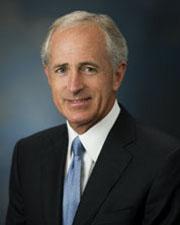
Corker, Bob
Cosponsor

Corker, Bob

Republican · TN · C001071

Joined May 18, 2015
Website
N/A
Phone
N/A
Office
N/A
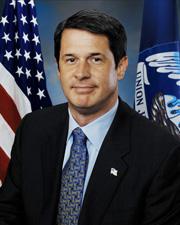
Vitter, David
Cosponsor

Vitter, David

Republican · LA-1 · V000127

Joined Jun 1, 2015
Website
N/A
Phone
N/A
Office
N/A
Donnelly, Joe
Cosponsor

Donnelly, Joe

Democratic · IN-2 · D000607

Joined Jul 16, 2015
Website
N/A
Phone
N/A
Office
N/A

Amendments

No amendment records are currently available for this bill.
Compiled bill record. Bill pages combine Congress.gov source payloads, normalized relationships, cached text analysis, vote links, and deterministic sector/signal extraction. This is not an official government record or legal advice; use the official source link when accuracy matters.