Back to search

Bill Text Stats

3
Analyzed sections
N/A
Detected dollar total
0
Tax signals
2
Deadlines

Signal counts

Tax density 0.0%
Spending density 0.0%
Deadline 2
Statutory Reference 2

Top agencies

N/A

Statutory references

16 U.S.C. 460d 1
Public Law 113-13 1

House Votes

No House roll call votes have been linked to this bill yet.

Timeline

Jun 3, 2013

Signed by President.

Jun 3, 2013

Signed by President.

Jun 3, 2013

Became Public Law No: 113-13.

Jun 3, 2013

Became Public Law No: 113-13.

May 22, 2013

Presented to President.

May 22, 2013

Presented to President.

May 21, 2013

Mr. Shuster moved to suspend the rules and pass the bill.

May 21, 2013

Considered under suspension of the rules. (consideration: CR H2825-2827)

May 21, 2013

DEBATE - The House proceeded with forty minutes of debate on S. 982.

May 21, 2013

Passed/agreed to in House: On motion to suspend the rules and pass the bill Agreed to by voice vote.(text: CR H2825)

May 21, 2013

On motion to suspend the rules and pass the bill Agreed to by voice vote. (text: CR H2825)

May 21, 2013

Motion to reconsider laid on the table Agreed to without objection.

May 20, 2013

Message on Senate action sent to the House.

May 20, 2013

Received in the House.

May 20, 2013

Held at the desk.

May 16, 2013

Introduced in Senate

May 16, 2013

Passed/agreed to in Senate: Introduced in the Senate, read twice, considered, read the third time, and passed without amendment by Unanimous Consent.(consideration: CR S3584-3585; text as passed Senate: CR S3585)

May 16, 2013

Introduced in the Senate, read twice, considered, read the third time, and passed without amendment by Unanimous Consent. (consideration: CR S3584-3585; text as passed Senate: CR S3585)

Affected Sectors

How to read this

Sectors are deterministic matches from official Congress.gov data and cached bill text. They are source-derived signals, not conclusions about intent or economic effect.

Evidence matches count official fields, normalized subjects, cached text snippets, or extracted entities that matched the sector rules.

Impact is a bill-level rollup used for sorting and filtering. It is not an economic impact estimate.

Confidence is the strongest individual match score behind that sector.

Evidence snippets show why a sector matched and can repeat when Congress.gov repeats the same phrase across official fields.

Defense
1 evidence matches
Impact 93% Confidence 88%

Department of Defense

Transportation
1 evidence matches
Impact 91% Confidence 85%

Transportation and Infrastructure Committee Standing House

CBO Cost Estimates

Official Congressional Budget Office cost estimate links associated with this bill through Congress.gov records.

How to read this

CBO estimates are official source documents with their own assumptions, scope, and publication dates. They can score a bill, a version of a bill, or a broader legislative package.

LawLinter stores the source link from Congress.gov and does not replace the CBO document. Use these cards as pointers for source review, not as independent fiscal advice.

CBO context shows source-attributed Congressional Budget Office cost estimates linked from official Congress.gov bill records. It is research context only; read the official CBO source document for assumptions, scope, and dates.

No CBO cost estimate is currently linked for this bill.

Campaign Finance Context

Related FEC/OpenFEC campaign-finance records for lawmakers and candidates tied to this bill through source-attributed legislative relationships. These are not donations to the bill itself.

How to read this

Amounts shown here are campaign-finance totals for sponsor or cosponsor-linked candidates and their committees in the displayed FEC cycle.

They are not donations to this bill, spending on this bill, or proof that money influenced or caused sponsorship, cosponsorship, votes, or legislative outcomes.

If multiple linked lawmakers have FEC records, this section can show multiple candidate cards and separate sponsor/cosponsor rollups.

Campaign-finance context uses source-attributed FEC/OpenFEC records that are related or relevant to the displayed bill, lawmaker, candidate, committee, or legislative relationship through deterministic links. It is research context only, not proof of influence, causation, endorsement, or that money caused a sponsorship, vote, or legislative outcome.

No FEC/OpenFEC campaign-finance context is currently linked for this bill.

Lobbying Context

Related LDA.gov filings where public lobbying activity descriptions reference this bill. These records are source-attributed research context, not evidence of influence or causation.

How to read this

LDA filings are public lobbying disclosure records. LawLinter links them here only when the filing activity text contains an exact-looking reference to this bill.

A filing can mention many issues, clients, agencies, or bills. A match should be treated as a pointer for review, not as a conclusion about why legislation changed or how any lawmaker acted.

Lobbying context uses source-attributed LDA.gov records that appear related to this bill through bill references in public lobbying activity descriptions. It is research context only, not proof of influence, causation, endorsement, lobbying effectiveness, or legislative intent.

No LDA.gov lobbying disclosure context is currently linked for this bill.

Summary

49 Public Law Jun 6, 2013

(This measure has not been amended since it was introduced. The expanded summary of the Senate passed version is repeated here.) Freedom to Fish Act - Requires the Chief of the Army Corps of Engineers to: (1) cease implementing and enforcing, until two years after enactment of this Act, any restricted area for hazardous waters at dams and other civil works structures in the Cumberland River Basin that the Chief established or modified between August 1, 2012, and the day before the enactment of this Act; and (2) remove any permanent physical barriers constructed in connection with such area. Requires the Chief, before establishing any such restricted area after this Act's enactment, to: (1) ensure that any restrictions are based on operational conditions that create hazardous waters, and (2) publish and seek and consider public comment on a draft describing the restricted area. Prohibits the Chief from: (1) implementing or enforcing the restricted area until two years after this Act's enactment, or (2) taking any action to establish a permanent physical barrier in connection with such area. (Excludes the installation and maintenance of measures for alerting the public of hazardous water conditions as such a permanent physical barrier.) Makes enforcement of a restricted area the sole responsibility of the state in which such area is located. Prohibits the Chief from assessing any penalty for entering a restricted area of public park and recreational facilities at water resource development projects.

82 Passed Senate without amendment May 23, 2013

(This measure has not been amended since it was introduced. The summary has been expanded because action occurred on the measure.) Freedom to Fish Act - Requires the Chief of the Army Corps of Engineers to: (1) cease implementing and enforcing, until two years after enactment of this Act, any restricted area for hazardous waters at dams and other civil works structures in the Cumberland River Basin that the Chief established or modified between August 1, 2012, and the day before the enactment of this Act; and (2) remove any permanent physical barriers constructed in connection with such area. Requires the Chief, before establishing any such restricted area after this Act's enactment, to: (1) ensure that any restrictions are based on operational conditions that create hazardous waters, and (2) publish and seek and consider public comment on a draft describing the restricted area. Prohibits the Chief from: (1) implementing or enforcing the restricted area until two years after this Act's enactment, or (2) taking any action to establish a permanent physical barrier in connection with such area. (Excludes the installation and maintenance of measures for alerting the public of hazardous water conditions as such a permanent physical barrier.) Makes enforcement of a restricted area the sole responsibility of the state in which such area is located. Prohibits the Chief from assessing any penalty for entering a restricted area of public park and recreational facilities at water resource development projects.

81 Passed House without amendment May 23, 2013

(This measure has not been amended since it was introduced. The expanded summary of the Senate passed version is repeated here.) Freedom to Fish Act - Requires the Chief of the Army Corps of Engineers to: (1) cease implementing and enforcing, until two years after enactment of this Act, any restricted area for hazardous waters at dams and other civil works structures in the Cumberland River Basin that the Chief established or modified between August 1, 2012, and the day before the enactment of this Act; and (2) remove any permanent physical barriers constructed in connection with such area. Requires the Chief, before establishing any such restricted area after this Act's enactment, to: (1) ensure that any restrictions are based on operational conditions that create hazardous waters, and (2) publish and seek and consider public comment on a draft describing the restricted area. Prohibits the Chief from: (1) implementing or enforcing the restricted area until two years after this Act's enactment, or (2) taking any action to establish a permanent physical barrier in connection with such area. (Excludes the installation and maintenance of measures for alerting the public of hazardous water conditions as such a permanent physical barrier.) Makes enforcement of a restricted area the sole responsibility of the state in which such area is located. Prohibits the Chief from assessing any penalty for entering a restricted area of public park and recreational facilities at water resource development projects.

00 Introduced in Senate May 21, 2013

Freedom to Fish Act - Requires the Chief of the Army Corps of Engineers to: (1) cease implementing and enforcing, until two years after enactment of this Act, any restricted area for hazardous waters at dams and other civil works structures in the Cumberland River Basin that the Chief established or modified between August 1, 2012, and the day before the enactment of this Act, and (2) remove any permanent physical barriers constructed in connection with such area. Requires the Chief, before establishing any such restricted area after this Act's enactment, to: (1) ensure that any restrictions are based on operational conditions that create hazardous waters, and (2) publish and seek and consider public comment on a draft describing the restricted area. Prohibits the Chief from: (1) implementing or enforcing the restricted area until two years after this Act's enactment, or (2) taking any action to establish a permanent physical barrier in connection with such area. (Excludes the installation and maintenance of measures for alerting the public of hazardous water conditions as such a permanent physical barrier.) Prohibits the Chief from assessing any penalty for entering a restricted area of public park and recreational facilities at water resource development projects.

Sponsors

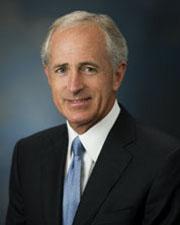
Corker, Bob
Cosponsor

Corker, Bob

Republican · TN · C001071

Joined May 16, 2013
Website
N/A
Phone
N/A
Office
N/A
Paul, Rand
Cosponsor

Paul, Rand

Republican · KY · P000603

Joined May 16, 2013
Website
N/A
Office
295 Russell Senate Office Building Washington, DC 20510

Amendments

No amendment records are currently available for this bill.
Compiled bill record. Bill pages combine Congress.gov source payloads, normalized relationships, cached text analysis, vote links, and deterministic sector/signal extraction. This is not an official government record or legal advice; use the official source link when accuracy matters.