Back to search
HR 2767 - 113

Protecting American Taxpayers and Homeowners Act of 2013

Ordered to be Reported (Amended) by the Yeas and Nays: 30 - 27.

Bill highlights

Votes, text signals, source context, and latest movement from this record.

Bill Text Stats

321
Analyzed sections
$800.2B
Detected dollar total
11
Tax signals
62
Deadlines

Signal counts

Tax density 3.4%
Spending density 17.4%
Statutory Reference 161
Deadline 62
Spending 56
Amendments 42
Agency 30
Courts 22
Studies 22
Rulemaking 20
Benefits 15
Privacy 11
Tax 11
Enforcement 6
Grants 5
Fees 1

Top agencies

Secretary of Housing and Urban Development 7
Agency shall 6
Secretary of Housing and Urban 4
Secretary of Agriculture 3
agency shall 2
Administrator of the Rural Housing Service of the 1
Commission shall 1
Secretary of Agriculture annual 1

Statutory references

15 U.S.C. 1639c 6
12 U.S.C. 1454 4
12 U.S.C. 1717 4
12 U.S.C. 1813 4
15 U.S.C. 77c 4
12 U.S.C. 1709 3
12 U.S.C. 1721 3
12 U.S.C. 4617 3

House Votes

No House roll call votes have been linked to this bill yet.

Timeline

Jul 24, 2013

Committee Consideration and Mark-up Session Held.

Jul 24, 2013

Ordered to be Reported (Amended) by the Yeas and Nays: 30 - 27.

Jul 22, 2013

Introduced in House

Jul 22, 2013

Introduced in House

Jul 22, 2013

Referred to the Committee on Financial Services, and in addition to the Committee on Ways and Means, for a period to be subsequently determined by the Speaker, in each case for consideration of such provisions as fall within the jurisdiction of the committee concerned.

Affected Sectors

How to read this

Sectors are deterministic matches from official Congress.gov data and cached bill text. They are source-derived signals, not conclusions about intent or economic effect.

Evidence matches count official fields, normalized subjects, cached text snippets, or extracted entities that matched the sector rules.

Impact is a bill-level rollup used for sorting and filtering. It is not an economic impact estimate.

Confidence is the strongest individual match score behind that sector.

Evidence snippets show why a sector matched and can repeat when Congress.gov repeats the same phrase across official fields.

Housing and real estate
391 evidence matches
Impact 100% Confidence 92%

Housing and Community Development

Housing and Community Development

Administrator of the Rural Housing administrator of the rural housing

Finance and banking
300 evidence matches
Impact 100% Confidence 78%

rt.--The Director of the Federal Housing Finance Agency shall make the first report required under section 10(a)(7) of the Federal Home Loan Bank Act, as added by subsection (a), not later than the end of the 180-day period beginning on the

is amended by ext display-inline="no-display-inline" Section 11 of the Federal Home Loan Bank Act ( 12 U.S.C. 1431 ) is amended by adding at the end the following new

eligible for n elected to each of three consecutive full terms as a director of a Federal Home Loan Bank and has served for all or part of each of those terms, that person shall not be eligible for election to a directorship of that Bank fo

Technology and data privacy
44 evidence matches
Impact 100% Confidence 81%

striking ``(o)'' and inserting Section 1113(o) of the Right to Financial Privacy Act of 1978 (12 U.S.C. 3413(o)) is amended-- (1) by striking ``(o)'' and inserting ``(o)(1)''; and (2) by adding at the end the following new paragraph: ``(2)

hibition in the preceding sentence shall not apply to a civil action against the Repository or any duly authorized agent thereof for breach of a contract, including breach of a representation or warranty, or breach of privacy related to dat

in the preceding sentence shall not apply to a civil action against the Repository or any duly authorized agent thereof for breach of a contract, including breach of a representation or warranty, or breach of privacy related to data collec

Agriculture
42 evidence matches
Impact 100% Confidence 84%

Secretary of Agriculture secretary of agriculture

Secretary of Agriculture secretary of agriculture

Secretary of Agriculture secretary of agriculture

Labor and employment
11 evidence matches
Impact 97% Confidence 78%

is amended by splay-inline="yes-display-inline" Section 205(j) of the Federal Credit Union Act ( 12 U.S.C. 1785(j) ) is amended by inserting the Bureau of Consu

is amended by ederal banking agency'' each place such term appears. (3) Federal credit union act.--Section 205(j) of the Federal Credit Union Act (12 U.S.C. 1785(j)) is amended by inserting ``the Bureau of Consumer Financial Protection,'' b

benefit g employment with the FHA as a result of a transfer under subsection (a) may retain, for 12 months after the date on which such transfer occurs, membership in any employee benefit program of the FHA or the Department of Housing and

Healthcare
8 evidence matches
Impact 95% Confidence 78%

ion, pueblo, village or community that the Secretary of the Interior acknowledges to exist as an Indian Tribe, pursuant to the Federally Recognized Indian Tribe List Act of 1994. (6) Residential health care facility.--The term ``residential

Secretary of Agriculture shall job or other income loss, health problems, death in the family, and such other situations as the Secretary may prescribe.''. (c) Regulations.--The FHA and the Secretary of Agriculture shall jointly issue regul

striking thereof) and inserting ing hospital (or; (II) in the matter preceding subparagraph (A), by striking thereof) /quot

Energy
5 evidence matches
Impact 94% Confidence 80%

12 U.S.C. 1701z graph id="HE09EAC446FBA4797B23BC1C48599B6CC" (6) Section 106 of the Energy Policy Act of 1992 ( 12 U.S.C. 1701z–16; relating to

(5) Section 328 of the Cranston-Gonzalez National Affordable Housing Act (12 U.S.C. 1713 note; relating to delegation of processing). (6) Section 106 of the Energy Policy Act of 1992 (12 U.S.C. 1701z-16; relating to energy efficient mortgag

lez National Affordable Housing Act (12 U.S.C. 1713 note; relating to delegation of processing). (6) Section 106 of the Energy Policy Act of 1992 (12 U.S.C. 1701z-16; relating to energy efficient mortgages pilot program). (7) Section 542 of

Tribal governments
2 evidence matches
Impact 90% Confidence 82%

exist eader The term Native American government means the government of any Indian or Alaska native tribe, band, nation, pueblo, village or community that the Secretary of the Interior acknowledges to exist as an Indian

wledges to exist as an nt.--The term ``Native American government'' means the government of any Indian or Alaska native tribe, band, nation, pueblo, village or community that the Secretary of the Interior acknowledges to exist as an Indian

Defense
2 evidence matches
Impact 89% Confidence 80%

cause of action defense. No action shall be maintained to enforce any liability created under this section unless brought within one year after the discovery of the facts constituting the cause of action and within three years after such ca

cause of action suit or defense. No action shall be maintained to enforce any liability created under this section unless brought within one year after the discovery of the facts constituting the cause of action and within three years after

CBO Cost Estimates

Official Congressional Budget Office cost estimate links associated with this bill through Congress.gov records.

How to read this

CBO estimates are official source documents with their own assumptions, scope, and publication dates. They can score a bill, a version of a bill, or a broader legislative package.

LawLinter stores the source link from Congress.gov and does not replace the CBO document. Use these cards as pointers for source review, not as independent fiscal advice.

CBO context shows source-attributed Congressional Budget Office cost estimates linked from official Congress.gov bill records. It is research context only; read the official CBO source document for assumptions, scope, and dates.

Existing agency spending context

Official USAspending.gov award records for agencies connected through bill-text agency signals. This helps show the existing agency spending landscape around the bill, not spending caused by the bill.

How to read this

USAspending records describe federal awards, grants, contracts, loans, direct payments, recipients, agencies, and dates reported through the official public spending system.

LawLinter links this context through agency names detected in bill text. That bridge is a research shortcut and should not be read as a legal or budget conclusion.

USAspending context shows official public award records for agencies connected through LawLinter bill-text agency signals. It is historical spending and award context only, not proof that this bill caused, authorized, required, or changed any award, grant, contract, payment, or program spending.

Agency sample by amount

Where the local sample is concentrated

$130.6B
Department of Agriculture $82.7B
500 sampled awards
Department of Housing and Urban Development $47.9B
927 sampled awards

Amounts reflect the local USAspending sample linked through agency text signals, not bill-caused spending.

Largest sampled awards

Award records in this context

MICHIGAN DEPARTMENT OF HEALTH AND HUMAN SERVICES $3.9B
other_financial_assistance · Department of Agriculture
MICHIGAN DEPARTMENT OF HEALTH AND HUMAN SERVICES $2.9B
other_financial_assistance · Department of Agriculture
MICHIGAN DEPARTMENT OF HEALTH AND HUMAN SERVICES $2.8B
other_financial_assistance · Department of Agriculture
DEPARTMENT OF EDUCATION CALIFORNIA $2.6B
grants · Department of Agriculture
DEPARTMENT OF EDUCATION CALIFORNIA $2.6B
grants · Department of Agriculture
DEPARTMENT OF EDUCATION CALIFORNIA $2.5B
grants · Department of Agriculture

These bars summarize the visible sampled awards below so large awards are easier to scan.

Agency spending context

Department of Agriculture

Matched bill text signal: Secretary of Agriculture
Sampled awards500
Award amount in local sample$82,689,702,291
Open official USAspending agency page
Agency spending context

Department of Housing and Urban Development

Matched bill text signal: Secretary of Housing and Urban Development
Sampled awards927
Award amount in local sample$47,888,035,502
Open official USAspending agency page
grants · B-25-UU-15-0001

COUNTY OF MAUI

Department of Housing and Urban Development
Award amount
$1,639,381,000

PURPOSE: COMMUNITY DEVELOPMENT BLOCK GRANT DISASTER RECOVERY (CDBG-DR) AND COMMUNITY DEVELOPMENT BLOCK GRANT MITIGATION (CDBG-MIT) GRANT FUNDS ARE APPROPRIATED BY CONGRESS AND ALLOCATED BY THE DEPARTMENT OF HOUSING AND URBAN DEVELOPMENT (HUD) AS AUTHORIZED UNDER TITLE I OF THE HOUSING AND COMMUNITY DEVELOPMENT ACT OF 1974, AS AMENDED. THE MAIN PURPOSE OF CDBG-DR FUNDS IS TO REBUILD DISASTER-IMPACTED AREAS AND PROVIDE CRUCIAL SEED MONEY TO START THE LONG-TERM RECOVERY PROCESS. THESE FLEXIBLE GRANTS HELP CITIES, COUNTIES, INDIAN TRIBES, AND STATES RECOVER FROM PRESIDENTIALLY DECLARED DISASTERS, ESPECIALLY IN LOW-INCOME AREAS, SUBJECT TO AVAILABILITY OF SUPPLEMENTAL APPROPRIATIONS. SINCE CDBG-DR ASSISTANCE MAY FUND A BROAD RANGE OF RECOVERY ACTIVITIES, HUD CAN HELP COMMUNITIES AND NEIGHBORHOODS THAT OTHERWISE MIGHT NOT RECOVER DUE TO LIMITED RESOURCES.; ACTIVITIES TO BE PERFORMED: STATE AND LOCAL GOVERNMENTS RECEIVE CDBG-DR AND CDBG-MIT FUNDS FROM HUD TO ASSIST COMMUNITIES RECOVERING FROM A PRESIDENTIALLY DECLARED DISASTER. HUD ALLOCATES FUNDS BASED ON THE UNMET RECOVERY NEEDS OF EACH COMMUNITY. HUD ISSUES AN ALLOCATION ANNOUNCEMENT NOTICE IN THE FEDERAL REGISTER WHICH WILL INCLUDE THE LIST OF GRANTEES, ALLOCATIONS, AND ANY WAIVERS AND ALTERNATIVE REQUIREMENTS. GRANTEES MAY USE THE FUNDS FOR DISASTER RELATED LONG-TERM RECOVERY, RESTORATION OF INFRASTRUCTURE, HOUSING, ECONOMIC REVITALIZATION, AND MITIGATION ACTIVITIES. ALL CDBG-DR AND CDBG-MIT ACTIVITIES MUST CLEARLY ADDRESS A DIRECT OR INDIRECT IMPACT OF THE DISASTER IN A PRESIDENTIALLY DECLARED AREA FOR THE COVERED DISASTER. EACH GRANTEE MUST DEVELOP AN ACTION PLAN THAT OUTLINES HOW THE GRANTEE PLANS TO ALLOCATE FUNDING TO A COMBINATION OF RECOVERY PROGRAMS. EACH GRANTEE MUST MAKE THE DRAFT ACTION PLAN AVAILABLE FOR PUBLIC COMMENT AND FEEDBACK PRIOR TO SUBMITTING THE PLAN TO HUD FOR REVIEW. ONCE APPROVED, THE ACTION PLAN SERVES AS THE BLUEPRINT FOR THE GRANTEE’S CDBG-DR PROGRAM. THE ACTION PLAN PROCESS IS OUTLINED IN THE APPLICABLE ALLOCATION ANNOUNCEMENT NOTICE.; EXPECTED OUTCOMES: CDBG-DR FUNDS ARE EXPECTED TO RESULT IN LONG-TERM DISASTER RECOVERY FOR COMMUNITIES IMPACTED BY PRESIDENTIALLY DECLARED DISASTERS.; INTENDED BENEFICIARIES: CDBG-DR FUNDS ARE INTENDED PRIMARILY FOR LOW- AND MODERATE-INCOME HOUSEHOLDS PER STATUTORY REQUIREMENTS. CDBG-DR IS THE ONLY FEDERAL DISASTER RESOURCE THAT PRIORITIZES LOW- AND MODERATE-INCOME HOUSEHOLDS. LOW- AND MODERATE-INCOME MEANS A FAMILY OR HOUSEHOLD WITH AN ANNUAL INCOME LESS THAN THE SECTION 8 LOW INCOME LIMIT, WHICH IS GENERALLY 80 PERCENT OF THE AREA MEDIAN INCOME. MOST ALLOCATIONS OF CDBG-DR AND CDBG-MIT FUNDS REQUIRE GRANTEES USE 70 PERCENT OF THE GRANT FUNDS TO BENEFIT LOW- AND MODERATE-INCOME PERSONS, HOWEVER GRANTEES MUST REVIEW THE APPLICABLE FEDERAL REGISTER NOTICE GOVERNING THE FUNDS TO CONFIRM THE REQUIREMENTS OF EACH GRANT. OVERALL, CDBG-DR FUNDS SHOULD BE USED TO ASSIST INDIVIDUALS, COMMUNITIES, AND/OR BUSINESSES SITUATED IN THE MOST IMPACTED AND DISTRESSED AREAS AFFECTED BY A PRESIDENTIALLY DECLARED DISASTER.; SUBRECIPIENT ACTIVITIES: THE SUBRECIPIENT ACTIVITIES ARE UNKNOWN AT THE TIME OF AWARD.

Campaign Finance Context

Related FEC/OpenFEC campaign-finance records for lawmakers and candidates tied to this bill through source-attributed legislative relationships. These are not donations to the bill itself.

How to read this

Amounts shown here are campaign-finance totals for sponsor or cosponsor-linked candidates and their committees in the displayed FEC cycle.

They are not donations to this bill, spending on this bill, or proof that money influenced or caused sponsorship, cosponsorship, votes, or legislative outcomes.

If multiple linked lawmakers have FEC records, this section can show multiple candidate cards and separate sponsor/cosponsor rollups.

Campaign-finance context uses source-attributed FEC/OpenFEC records that are related or relevant to the displayed bill, lawmaker, candidate, committee, or legislative relationship through deterministic links. It is research context only, not proof of influence, causation, endorsement, or that money caused a sponsorship, vote, or legislative outcome.

No FEC/OpenFEC campaign-finance context is currently linked for this bill.

Lobbying Context

Related LDA.gov filings where public lobbying activity descriptions reference this bill. These records are source-attributed research context, not evidence of influence or causation.

How to read this

LDA filings are public lobbying disclosure records. LawLinter links them here only when the filing activity text contains an exact-looking reference to this bill.

A filing can mention many issues, clients, agencies, or bills. A match should be treated as a pointer for review, not as a conclusion about why legislation changed or how any lawmaker acted.

Lobbying context uses source-attributed LDA.gov records that appear related to this bill through bill references in public lobbying activity descriptions. It is research context only, not proof of influence, causation, endorsement, lobbying effectiveness, or legislative intent.
No LDA.gov lobbying disclosure context is currently linked for this bill.

Summary

00 Introduced in House Oct 21, 2013

Protecting American Taxpayers and Homeowners Act of 2013 - GSE Bailout Elimination and Taxpayer Protection Act - Directs the Director of the Federal Housing Finance Agency (FHFA), five years after enactment of this Act, to appoint FHFA as receiver of the Federal National Mortgage Association (Fannie Mae) and the Federal Home Loan Mortgage Corporation (Freddie Mac) (government sponsored enterprises or (GSEs) under the Federal Housing Enterprises Financial Safety and Soundness Act of 1992, to carry out mandatory receivership (thus terminating the current conservatorship for such GSEs). Repeals the Fannie Mae and Freddie Mac charters effective five years after enactment of this Act. Amends the Housing and Community Development Act of 1992, the Federal Housing Enterprises Financial Safety and Soundness Act of 1992, the Federal National Mortgage Association Charter Act, and the Federal Home Loan Mortgage Corporation Act to prescribe specified requirements, limitations, and prohibitions on GSE activities until their charters are repealed and authorities terminated. FHA Reform and Modernization Act of 2013 - Establishes the Federal Housing Administration (FHA) as a wholly owned government corporation to: (1) provide residential mortgage insurance and other credit enhancement and related activities; (2) supplement private sector activity by serving hard-to-serve markets, developing new mortgage products, and filling gaps in the provision and delivery of mortgage credit; and (3) deliver housing mortgage insurance and credit enhancement and provide other services in a non-discriminatory manner. Prescribes FHA requirements concerning: (1) budget and business plans; (2) examinations, reports, and cost estimates; (3) the Mutual Mortgage Insurance Fund and capital ratios, reserves, and restoration plans; (4) borrower suspension, ineligibility, and foreclosure; (5) mortgage repurchase; (6) mortgagee indemnification; (7) eminent domain; and (8) residual income. Transfers to FHA, at the end of a five-year transition period, the functions of, authority provided to, and the responsibilities of the Secretary of Housing and Urban Development (HUD) and HUD personnel. Amends the National Housing Act to repeal the home equity conversion mortgage (reverse mortgage) program and mortgage insurance for hospitals. National Mortgage Market Utility Act of 2013 - Requires the Director of FHFA to provide for the organization, incorporation, examination, operation, and regulation of a not-for-profit national mortgage market Utility to: (1) enhance efficiency, liquidity, and security in the secondary market for residual mortgages; (2) establish standards for originating and servicing eligible collateral and for issuers and trustees of qualified securities, which would be exempt from the Securities Act of 1933; and (3) operate a common securitization platform that could be available to issues of residential mortgage-backed securities. Prohibits the Utility from: (1) originating, servicing, insuring, or guaranteeing any residential mortgage or other associated financial instrument; or (2) guaranteeing timely payment of principal or interest on any mortgage-related security. Requires the Director to: (1) issue a charter for the Utility; and (2) oversee the transfer to the Utility of the securitization infrastructure announced by the FHFA on October 4, 2012, and as developed by an enterprise or the enterprises in conservatorship (the Platform). Sets forth standards for qualified securities. Directs the utility to organize and operate a national mortgage data repository. United States Covered Bond Act of 2013 - Directs the Secretary of the Treasury to establish a covered bond regulatory oversight program for the evaluation and maintenance of programs of eligible issuers under which, on the security of a single cover pool, one or more series of covered bonds may be issued. Defines covered bonds as any recourse debt obligation of an eligible issuer that: (1) has an original term to maturity of not less than one year, (2) is secured by a perfected security interest in or other perfected lien on a cover pool owned directly or indirectly by the obligation's issuer, (3) is issued under a covered bond program approved by the applicable covered bond regulator, (4) is identified in a register of covered bonds maintained by the Secretary, and (5) is not a deposit subject to the Federal Deposit Insurance Act. Amends the Secondary Mortgage Market Enhancement Act of 1984 to authorize any person, trust, corporation, partnership, association, business trust, or business entity created under federal or state law to purchase, hold, and invest in covered bonds. Amends the Internal Revenue Code with respect to the tax treatment of estates created under covered bond programs and certain transfers under covered bond programs. Imposes a tax on certain estates created under covered bond programs. Directs the Board of Governors of the Federal Reserve System (Board), the Federal Deposit Insurance Corporation (FDIC), and the Comptroller of the Currency to study the impact of the Regulatory Capital Rules finalized by the Board on July 2, 2013 (pursuant to the Third Basel Accord on capital adequacy, stress testing, and market liquidity risk, or Basel III). Prohibits the Board, the FDIC, and the Comptroller of the Currency, in implementing the Basel III Liquidity Coverage Ratio amendments, from requiring, as a condition for status as a high quality liquid asset, that residential mortgage-backed securities be collateralized only by (or be collateralized by a certain percentage of) full recourse mortgage loans. Amends the Truth in Lending Act to modify the items, compensation, and charges included in points and fees with respect to a high-cost mortgage. Amends the Bank Holding Company Act to exclude from hedge funds and private equity funds certain issuers of asset-backed securities. Amends the Securities Act of 1933 with respect to exemptions from specified prohibitions relating to interstate commerce and the mails for transactions by any person other than an issuer, underwriter, or dealer or transactions by an issuer not involving any public offering. Prohibits the Securities and Exchange Commission (SEC) from conditioning the availability of such exemptions upon an issuer's undertaking to provide to investors, in connection with initial offers or sales or on an ongoing basis after an initial offer or sale, the same or substantially similar information as would be required in a transaction to which such prohibitions apply. (Thus suspends Regulation AB II rulemaking.) Amends the Dodd-Frank Wall Street Reform and Consumer Protection Act (Dodd-Frank Act) and the Securities Exchange Act of 1934 to repeal the requirement that federal banking agencies and the SEC jointly prescribe credit risk regulations for securitizers to retain an economic interest in a portion of the credit risk for any asset the securitizer, through the issuance of an asset-backed security, transfers, sells, or conveys to a third party. Amends the Truth in Lending Act, the Home Mortgage Disclosure Act of 1975, the Truth in Lending Act, and the Dodd-Frank Act to make exemptions from specified requirements, or repeal related requirements, for certain residential mortgages, particularly those serving as collateral for a qualified security. Amends the Federal Financial Institutions Examination Council Act of 1978 with respect to: (1) timeliness of examination reports, (2) examination standards, (3) establishment of an Office of Examination Ombudsman, and (4) the right to appeal before an independent administrative law judge. Common Sense Economic Recovery Act of 2013 - Cites circumstances under which, for purposes of determining capital requirements or measuring an insured depository institution's capital, such an institution may treat a non-accrual loan as an accrual loan. (Non-accrual [also known as non-performing or doubtful] loans are those on which interest is overdue and full collection of principal is uncertain, and so interest, if it has not been paid in over 90 days, cannot be credited to the bank's revenue account until it has actually been received.)

Sponsors

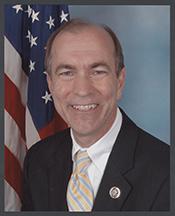
Garrett, Scott
Sponsor

Garrett, Scott

Republican · NJ-5 · G000548

Joined Jul 22, 2013
Website
N/A
Phone
N/A
Office
N/A

Amendments

No amendment records are currently available for this bill.
Compiled bill record. Bill pages combine Congress.gov source payloads, normalized relationships, cached text analysis, vote links, and deterministic sector/signal extraction. This is not an official government record or legal advice; use the official source link when accuracy matters.