Back to search
HR 1273 - 105

National Science Foundation Authorization Act of 1998

Became Public Law No: 105-207.

Bill Text Stats

Bill text analysis is not available for this record yet.

Affected Sectors

How to read this

Sectors are deterministic matches from official Congress.gov data and cached bill text. They are source-derived signals, not conclusions about intent or economic effect.

Evidence matches count official fields, normalized subjects, cached text snippets, or extracted entities that matched the sector rules.

Impact is a bill-level rollup used for sorting and filtering. It is not an economic impact estimate.

Confidence is the strongest individual match score behind that sector.

Evidence snippets show why a sector matched and can repeat when Congress.gov repeats the same phrase across official fields.

Telecom and broadband
2 evidence matches
Impact 95% Confidence 86%

Science, Technology, Communications

National Science Foundation Authorization Act of 1998 Became Public Law No: 105-207. Science, Technology, Communications

CBO Cost Estimates

Official Congressional Budget Office cost estimate links associated with this bill through Congress.gov records.

How to read this

CBO estimates are official source documents with their own assumptions, scope, and publication dates. They can score a bill, a version of a bill, or a broader legislative package.

LawLinter stores the source link from Congress.gov and does not replace the CBO document. Use these cards as pointers for source review, not as independent fiscal advice.

CBO context shows source-attributed Congressional Budget Office cost estimates linked from official Congress.gov bill records. It is research context only; read the official CBO source document for assumptions, scope, and dates.

No CBO cost estimate is currently linked for this bill.

Campaign Finance Context

Related FEC/OpenFEC campaign-finance records for lawmakers and candidates tied to this bill through source-attributed legislative relationships. These are not donations to the bill itself.

How to read this

Amounts shown here are campaign-finance totals for sponsor or cosponsor-linked candidates and their committees in the displayed FEC cycle.

They are not donations to this bill, spending on this bill, or proof that money influenced or caused sponsorship, cosponsorship, votes, or legislative outcomes.

If multiple linked lawmakers have FEC records, this section can show multiple candidate cards and separate sponsor/cosponsor rollups.

Campaign-finance context uses source-attributed FEC/OpenFEC records that are related or relevant to the displayed bill, lawmaker, candidate, committee, or legislative relationship through deterministic links. It is research context only, not proof of influence, causation, endorsement, or that money caused a sponsorship, vote, or legislative outcome.

No FEC/OpenFEC campaign-finance context is currently linked for this bill.

Lobbying Context

Related LDA.gov filings where public lobbying activity descriptions reference this bill. These records are source-attributed research context, not evidence of influence or causation.

How to read this

LDA filings are public lobbying disclosure records. LawLinter links them here only when the filing activity text contains an exact-looking reference to this bill.

A filing can mention many issues, clients, agencies, or bills. A match should be treated as a pointer for review, not as a conclusion about why legislation changed or how any lawmaker acted.

Lobbying context uses source-attributed LDA.gov records that appear related to this bill through bill references in public lobbying activity descriptions. It is research context only, not proof of influence, causation, endorsement, lobbying effectiveness, or legislative intent.
No LDA.gov lobbying disclosure context is currently linked for this bill.

Summary

35 Passed Senate amended Jan 11, 2001

TABLE OF CONTENTS: Title I: National Science Foundation Authorization Title II: General Provisions National Science Foundation Authorization Act of 1998 - Title I: National Science Foundation Authorization - Sets forth long-term goals and core strategies of the National Science Foundation (NSF). Authorizes appropriations to NSF through FY 2000. (Sec. 103) Provides for the proportional reduction of Research and Related Activities amounts available for each scientific directorate if the total amount appropriated to carry out Research and Related Activities for FY 1998 or 1999 is less than the amount authorized under this Act. (Sec. 104) Sets a limitation on consultation, representation, and other extraordinary expenses. (Sec. 105) Prohibits funds appropriated pursuant to this Act from being used for the United States Man and the Biosphere Program or related projects. Title II: General Provisions - Directs NSF to submit to the Congress an annual plan for the proposed construction of, and repair and upgrades to, national research facilities. (Sec. 202) Makes administrative amendments to the National Science Foundation Act of 1950, the National Science Foundation Authorization Act, 1976, the National Science Foundation Authorization Act of 1988, and the Science and Engineering Equal Opportunities Act. (Sec. 203) Directs the Director of the Office of Science and Technology Policy, in consultation with other relevant agencies the Director deems appropriate, to prepare a certain report analyzing the Federal indirect cost reimbursement rates paid to universities in comparison with Federal indirect cost reimbursement rates paid to other entities, such as industry, government laboratories, research hospitals, and non-profit institutions. Requires that such report be transmitted to the Congress no later than one year after the date of enactment of this Act. (Sec. 204) Subjects NSF temporary employees to the same financial disclosure requirements as apply to permanent employees. (Sec. 205) Requires that if any funds appropriated pursuant to the amendments made by this Act are subject to a reprogramming action that requires notice to be provided to the House and Senate Appropriations Committees, notice of that action shall concurrently be provided to the Senate Committee on Commerce, Science, and Transportation, the Senate Committee on Labor and Human Resources, and the House Committee on Science. Directs the NSF Director to provide notice not later than 15 days before any major reorganization of any NSF program, project, or activity. (Sec. 206) Expresses the sense of the Congress that the NSF Director should, to the greatest extent practicable and in a manner consistent with applicable Federal law (including Executive Order No. 12999), donate educationally useful Federal equipment to schools in order to enhance the science and mathematics programs of those schools. Requires: (1) the Director to submit an annual report to the President describing donations of educationally useful Federal equipment to schools; and (2) the President to submit that report to the Congress with the Federal budget proposal. (Sec. 207) Directs the NSF Director: (1) with the assistance of the Office of Science and Technology Policy, to convene appropriate Federal officials, appropriate representatives of the postsecondary education community, and reserve members of the armed forces to discuss and seek a consensus on the appropriate resolution to problems relating to the academic standing and financial responsibilities of postsecondary students called or ordered to active duty in the armed forces; and (2) to report to the Congress on the results and any consensus recommendations, as well as any significant opinions expressed by each participant that are not incorporated in such a recommendation. (Sec. 208) Amends the National Defense Authorization Act for Fiscal Year 1991 to rename the Critical Technologies Institute as the Science and Technology Policy Institute. (Sec. 209) Expresses the sense of the Congress that NSF should: (1) give high priority to correcting all two-digit date-related problems in its computer systems to ensure that those systems continue to operate effectively in the year 2000 and beyond; (2) assess immediately the extent of the risk to NSF operations posed by such problems, and plan and budget for achieving Year 2000 compliance for all its mission-critical systems; and (3) develop contingency plans for those systems that NSF is unable to correct in time.

36 Passed House amended Jan 11, 2001

TABLE OF CONTENTS: Title I: National Science Foundation Authorization Title II: General Provisions National Science Foundation Authorization Act of 1997 - Title I: National Science Foundation Authorization - Authorizes appropriations to the National Science Foundation (NSF) for FY 1998 and 1999. Prohibits funding for the Large Hadron Collider project at the European Organization for Nuclear Research (CERN) unless the NSF Director, in consultation with the Secretary of Energy, has transmitted to specified congressional committees a report on the impact of such funding on the operations and viability of U.S. high energy and nuclear physics facilities. (Sec. 104) Prohibits funds appropriated pursuant to this Act from being used for the U.S. Man and Biosphere Program or related projects. Title II: General Provisions - Directs the NSF to submit to the Congress an annual upgrade and maintenance plan for national research facilities. (Sec. 202) Makes administrative amendments to the National Science Foundation Act of 1950, the National Science Foundation Authorization Act, 1976, the National Science Foundation Authorization Act of 1988, and the Science and Engineering Equal Opportunities Act. (Sec. 203) Directs the Director of the Office of Science and Technology Policy, in consultation with other relevant agencies, to prepare a report analyzing what steps would be needed to: (1) reduce by ten percent the proportion of Federal assistance to institutions of higher education that are allocated for indirect costs; and (2) reduce the variance among indirect cost rates of different higher education institutions, including an evaluation of the relative benefits and burdens of each option on higher education institutions. (Sec. 204) Subjects NSF temporary employees to the same financial disclosure requirements as apply to permanent employees. (Sec. 205) Requires an institution of higher education receiving NSF funds to grant a military-educational leave of absence to a student on active military duty (other than training). (Sec. 206) Renames the Critical Technologies Institute as the Science and Technology Policy Institute. (Sec. 207) Prohibits funds authorized by this Act, or any other Act enacted before the enactment of this Act, from being used for the Next Generation Internet. Provides for funds to be used for the continuation of programs and activities that were funded and carried out during FY 1997. (Sec. 208) Prohibits the use of any funds authorized under this Act from being used for any lobbying activity, except that the prohibition shall not prevent U.S. officers or employees from communicating to Members of Congress on the request of any Member, or to the Congress, through the proper channels, requests for legislation or appropriations which they deem necessary for the efficient conduct of the public business. Excludes from NSF awards (grant agreements) for five years any person who received project funds not subjected to competitive merit-based awards. Exempts persons who are members of a law-specified class. Defines the term "grant agreement." Excludes from the definition of a grant agreement a cooperative agreement or a cooperative research and development agreement. (Sec. 209) Requires that if any funds authorized by this Act are subject to a reprogramming action that requires notice to be provided to the House and Senate Appropriations Committees, notice of such action shall concurrently be provided to the House Committee on Science and the Senate Committees on Labor and Human Resources and Commerce, Science, and Transportation. Directs the NSF Director to provide notice not later than 15 days before any major reorganization of any NSF program, project, or activity. (Sec. 210) Expresses the sense of the Congress that NSF should: (1) give high priority to correcting all two-digit date-related problems in its computer systems to ensure that those systems continue to operate effectively in the year 2000 and beyond; (2) assess immediately the extent of the risk to NSF operations posed by such problems, and plan and budget for achieving Year 2000 compliance for all its mission-critical systems; and (3) develop contingency plans for those systems that NSF is unable to correct in time. (Sec. 211) Authorizes NSF to participate in the National Oceanic Partnership Program. (Sec. 212) Prohibits funds appropriated pursuant to this Act from being expended by an entity unless the entity agrees that in expending the assistance, the entity will comply with the Buy American Act. Expresses the sense of the Congress that, in the case of any equipment or products that may be authorized to be purchased with financial assistance provided under this Act, entities receiving such assistance should, in expending the assistance, purchase only American-made equipment and products. Directs the NSF Director, in providing financial assistance under this Act, to provide to each recipient of the assistance a notice describing compliance with the Buy American Act. (Sec. 213) Expresses the sense of the Congress that the NSF Director shall: (1) to the greatest extent practicable, donate surplus computers and other research equipment to elementary and secondary schools to enhance their science and mathematics programs; and (2) report annually to the appropriate congressional committees on such activity.

17 Reported to House with amendment(s) Jan 11, 2001

TABLE OF CONTENTS: Title I: National Science Foundation Authorization Title II: General Provisions National Science Foundation Authorization Act of 1997 - Title I: National Science Foundation Authorization - Authorizes appropriations to the National Science Foundation (NSF) for FY 1998 and 1999. Prohibits funding for the Large Hadron Collider project at the European Organization for Nuclear Research (CERN) unless the Director, in consultation with the Secretary of Energy, has transmitted to specified congressional committees a report on the impact of such funding on the operations and viability of U.S. high energy and nuclear physics facilities. Title II: General Provisions - Directs the NSF to submit to the Congress an annual upgrade and maintenance plan for national research facilities. (Sec. 202) Makes administrative amendments to the National Science Foundation Act of 1950, the National Science Foundation Authorization Act, 1976, the National Science Foundation Authorization Act of 1988, and the Science and Engineering Equal Opportunities Act. (Sec. 203) Directs the Director of the Office of Science and Technology Policy, in consultation with other relevant agencies, to prepare a report analyzing what steps would be needed to: (1) reduce by ten percent the proportion of Federal assistance to institutions of higher education that are allocated for indirect costs; and (2) reduce the variance among indirect cost rates of different higher education institutions, including an evaluation of the relative benefits and burdens of each option on higher education institutions. Requires that such report be transmitted to the Congress no later than December 31, 1997. (Sec. 204) Subjects NSF temporary employees to the same financial disclosure requirements as apply to permanent employees. (Sec. 205) Requires an institution of higher education receiving NSF funds to grant a military-educational leave of absence to a student on active military duty (other than training). (Sec. 206) Renames the Critical Technologies Institute as the Science and Technology Policy Institute. (Sec. 207) Prohibits funds authorized by this Act, or any other Act enacted before the enactment of this Act, from being used for the Next Generation Internet. Provides for funds to be used for the continuation of programs and activities that were funded and carried out during FY 1997. (Sec. 208) Prohibits the use of any funds authorized under this Act from being used for any lobbying activity, except that the prohibition shall not prevent U.S. officers or employees or of its departments or agencies, from communicating to Members of Congress on the request of any Member, or to the Congress, through the proper channels, requests for legislation or appropriations which they deem necessary for the efficient conduct of the public business. Excludes from NSF awards (grant agreements) for five years any person who received project funds not subject to competitive merit-based awards. (Exempts persons who are members of a law-specified class.) Defines the term "grant agreement." Excludes from the definition of a grant agreement a cooperative agreement or a cooperative research and development agreement. (Sec. 209) Requires that if any funds authorized by this Act are subject to a reprogramming action that requires notice to be provided to the House and Senate Appropriations Committees, notice of such action shall concurrently be provided to the House Committee on Science and the Senate Committees on Labor and Human Resources and Commerce, Science, and Transportation. Directs the NSF Director to provide notice not later than 15 days before any major reorganization of any NSF program, project, or activity. (Sec. 210) Expresses the sense of the Congress that NSF should: (1) give high priority to correcting all two-digit date-related problems in its computer systems to ensure that those systems continue to operate effectively in the year 2000 and beyond; (2) assess immediately the extent of the risk to NSF operations posed by such problems, and plan and budget for achieving Year 2000 compliance for all its mission-critical systems; and (3) develop contingency plans for those systems that NSF is unable to correct in time. (Sec. 211) Authorizes NSF to participate in the National Oceanic Partnership Program. (Sec. 212) Prohibits funds appropriated pursuant to this Act from being expended by an entity unless the entity agrees that in expending the assistance, the entity will comply with the Buy American Act. Expresses the sense of the Congress that, in the case of any equipment or products that may be authorized to be purchased with financial assistance provided under this Act, entities receiving such assistance should, in expending the assistance, purchase only American-made equipment and products. Directs the NSF Director, in providing financial assistance under this Act, to provide to each recipient of the assistance a notice describing compliance with the Buy American Act.

00 Introduced in House Jan 11, 2001

TABLE OF CONTENTS: Title I: National Science Foundation Authorization Title II: General Provisions National Science Foundation Authorization Act of 1997 - Title I: National Science Foundation Authorization - Authorizes appropriations to the National Science Foundation (NSF) for FY 1998 and 1999. Title II: General Provisions - Directs NSF to submit to the Congress an annual upgrade and maintenance plan for national research facilities. (Sec. 202) Makes administrative amendments to the National Science Foundation Act of 1950, the National Science Foundation Authorization Act, 1976, the National Science Foundation Authorization Act of 1988, and the Science and Engineering Equal Opportunities Act. (Sec. 203) Directs the Director of the Office of Science and Technology Policy, in consultation with other relevant agencies, to prepare a report analyzing what steps would be needed to: (1) reduce by ten percent the proportion of Federal assistance to institutions of higher education that are allocated for indirect costs; and (2) reduce the variance among indirect cost rates of different higher education institutions, including an evaluation of the relative benefits and burdens of each option on higher education institutions. Requires that such report be transmitted to the Congress no later than December 31, 1997. (Sec. 204) Subjects NSF temporary employees to the same financial disclosure requirements as apply to permanent employees. (Sec. 205) Requires an institution of higher education receiving NSF funds to grant a military-educational leave of absence to a student on active military duty (other than training). (Sec. 206) Renames the Critical Technologies Institute as the Science Studies Institute. (Sec. 207) Prohibits funds authorized by this Act, or any other Act enacted before the enactment of this Act, from being used for the Next Generation Internet. (Sec. 208) Prohibits the use of any funds authorized under this Act from being used for any lobbying activity, except that the prohibition shall not prevent U.S. officers or employees or of its departments or agencies, from communicating to Members of Congress on the request of any Member, or to the Congress, through the proper channels, requests for legislation or appropriations which they deem necessary for the efficient conduct of the public business. Excludes from NSF awards for five years any person who received project funds not subject to competitive merit-based awards. (Exempts persons who are members of a law-specified class.) (Sec. 209) Requires that if any funds authorized by this Act are subject to a reprogramming action that requires notice to be provided to the House and Senate Appropriations Committees, notice of such action shall concurrently be provided to the House Committee on Science and the Senate Committee on Commerce, Science, and Transportation. Directs the NSF Director to provide notice not later than 15 days before any major reorganization of any NSF program, project, or activity. (Sec. 210) Expresses the sense of the Congress that NSF should: (1) give high priority to correcting all two-digit date-related problems in its computer systems to ensure that those systems continue to operate effectively in the year 2000 and beyond; (2) assess immediately the extent of the risk to NSF operations posed by such problems, and plan and budget for achieving Year 2000 compliance for all its mission-critical systems; and (3) develop contingency plans for those systems that NSF is unable to correct in time.

Sponsors

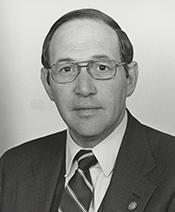
Schiff, Steven
Sponsor

Schiff, Steven

Republican · NM-1 · S000125

Joined Apr 10, 1997
Website
N/A
Phone
N/A
Office
N/A

Timeline

Jul 29, 1998

Signed by President.

Jul 29, 1998

Signed by President.

Jul 29, 1998

Became Public Law No: 105-207.

Jul 29, 1998

Became Public Law No: 105-207.

Jul 17, 1998

Presented to President.

Jul 17, 1998

Presented to President.

Jul 14, 1998

Mr. Sensenbrenner moved that the House suspend the rules and agree to the Senate amendment.

Jul 14, 1998

DEBATE - The House proceeded with forty minutes of debate.

Jul 14, 1998

Resolving differences -- House actions: On motion that the House suspend the rules and agree to the Senate amendment Agreed to by voice vote.(consideration: CR H5417-5424)

Jul 14, 1998

On motion that the House suspend the rules and agree to the Senate amendment Agreed to by voice vote. (consideration: CR H5417-5424)

Jul 14, 1998

Motion to reconsider laid on the table Agreed to without objection.

May 13, 1998

Message on Senate action sent to the House.

May 12, 1998

Senate Committee on Labor and Human Resources discharged by Unanimous Consent.(consideration: CR S4664)

May 12, 1998

Senate Committee on Labor and Human Resources discharged by Unanimous Consent. (consideration: CR S4664)

May 12, 1998

Senate struck all after the Enacting Clause and substituted the language of S. 1046 amended.

May 12, 1998

Passed/agreed to in Senate: Passed Senate in lieu of S. 1046 with an amendment by Yea-Nay Vote. 99-0. Record Vote No: 127.

May 12, 1998

Passed Senate in lieu of S. 1046 with an amendment by Yea-Nay Vote. 99-0. Record Vote No: 127.

Apr 24, 1997

Rule H. Res. 126 passed House.

Apr 24, 1997

Considered under the provisions of rule H. Res. 126. (consideration: CR H1808-1819)

Apr 24, 1997

Rule provides for consideration of H.R. 1273 with 1 hour of general debate. Previous question shall be considered as ordered without intervening motions except motion to recommit with or without instructions. It shall be in order to consider as an original bill for the purpose of amendment under the five-minute rule the amendment in the nature of a substitute recommended by the Committee on Science now printed in the bill. Measure will be read by title. Bill is open to amendments.

Apr 24, 1997

House resolved itself into the Committee of the Whole House on the state of the Union pursuant to H. Res. 126 and Rule XXIII.

Apr 24, 1997

The Speaker designated the Honorable John J. Duncan Jr. to act as Chairman of the Committee.

Apr 24, 1997

GENERAL DEBATE - The Committee of the Whole proceeded with one hour of general debate.

Apr 24, 1997

The House rose from the Committee of the Whole House on the state of the Union to report H.R. 1273.

Apr 24, 1997

The previous question was ordered pursuant to the rule.

Apr 24, 1997

The House adopted the amendment in the nature of a substitute as agreed to by the Committee of the Whole House on the state of the Union.

Apr 24, 1997

Passed/agreed to in House: On passage Passed by voice vote.

Apr 24, 1997

On passage Passed by voice vote.

Apr 24, 1997

Motion to reconsider laid on the table Agreed to without objection.

Apr 24, 1997

Received in the Senate and read twice and referred to the Committee on Labor and Human Resources.

Apr 23, 1997

Rules Committee Resolution H. Res. 126 Reported to House. Rule provides for consideration of H.R. 1273 with 1 hour of general debate. Previous question shall be considered as ordered without intervening motions except motion to recommit with or without instructions. It shall be in order to consider as an original bill for the purpose of amendment under the five-minute rule the amendment in the nature of a substitute recommended by the Committee on Science now printed in the bill. Measure will be read by title. Bill is open to amendments.

Apr 21, 1997

Reported (Amended) by the Committee on Science. H. Rept. 105-63.

Apr 21, 1997

Reported (Amended) by the Committee on Science. H. Rept. 105-63.

Apr 21, 1997

Placed on the Union Calendar, Calendar No. 46.

Apr 16, 1997

Committee Consideration and Mark-up Session Held.

Apr 16, 1997

Ordered to be Reported (Amended) by Voice Vote.

Apr 10, 1997

Introduced in House

Apr 10, 1997

Introduced in House

Apr 10, 1997

Sponsor introductory remarks on measure. (CR E623)

Apr 10, 1997

Referred to the House Committee on Science.

House Votes

No House roll call votes have been linked to this bill yet.

Amendments

No amendment records are currently available for this bill.
Compiled bill record. Bill pages combine Congress.gov source payloads, normalized relationships, cached text analysis, vote links, and deterministic sector/signal extraction. This is not an official government record or legal advice; use the official source link when accuracy matters.