(Measure passed Senate, amended) South Pacific Tuna Act of 1988 - Declares that seizure by a Pacific Island Party of a vessel of the United States shall not be considered to be a seizure under the Magnuson Fishery Conservation and Management Act or the Fishermen's Protective Act of 1967 if the seizure is in accordance with the provisions of the Treaty on Fisheries Between the Governments of Certain Pacific Island States and the Government of the United States of America (Treaty). Makes it unlawful for any person subject to U.S. jurisdiction to engage in a variety of actions relating to fishing and the Treaty. Provides for criminal and civil penalties and in rem jurisdiction over a fishing vessel. Specifies the number and fees of licenses to fish in the Licensing Area in the initial year of implementation. Provides for administration of licensing. Makes the Secretary of Commerce, in cooperation with the Secretary of State, responsible for enforcement of this Act. Directs the Secretary of Commerce, at the request of the government of a Pacific Island Party, to investigate any alleged infringement of the Treaty involving a U.S. vessel. Requires notice to the operator of any vessel concerned of the nature of the investigation and the right of the operator to submit and present comments, information, and evidence. Directs the Secretary of Commerce, prior to instituting certain proceedings, to notify the Pacific Island Party having jurisdiction and, if that Party objects, prohibits the Secretary from instituting the proceedings. Sets forth the powers of Authorized Officers and provides for exclusive jurisdiction of the U.S. district courts over any case or controversy arising under this Act. Sets forth circumstances in which the Secretary of Commerce is authorized, and circumstances in which the Secretary is required, to order a fishing vessel to leave the Licensing, Limited, or Closed Areas. Sets forth reporting requirements. Requires that the Secretary of Commerce maintain certain information as confidential, including information requested under the Freedom of Information Act, subject to exception. Requires the fishing gear of a vessel, while the vessel is in a Closed Area, to be stowed so as not to be readily available for fishing. Provides for observers on board vessels. Requires the U.S. tuna industry to provide a specified sum annually in technical assistance. Directs the Secretary of State, in the event of a dispute requiring the establishment of an arbitral tribunal, to appoint an arbitrator to act as a member of an arbitral tribunal as provided by the Treaty. by the Treaty. Requires the total value of any amount collected under the civil or criminal penalties provisions of this Act, to the extent required by certain provisions of the Treaty, to be paid by the United States to the Administrator designated by the Pacific Island Parties to act on their behalf. Authorizes the Secretary of State to act for the United States in regard to the Treaty. Authorizes appropriations for FY 1988 through 1992. Declares that funds appropriated for the purposes of the Treaty may be used notwithstanding provisions of the Foreign Assistance Act of 1961 or of any appropriations Act that imposes restrictions on cash transfer assistance which are inconsistent with the provisions of the Treaty.
S 1989 - 100South Pacific Tuna Act of 1988
Became Public Law No: 100-330.
Bill Text Stats
Affected Sectors
How to read this
Sectors are deterministic matches from official Congress.gov data and cached bill text. They are source-derived signals, not conclusions about intent or economic effect.
Evidence matches count official fields, normalized subjects, cached text snippets, or extracted entities that matched the sector rules.
Impact is a bill-level rollup used for sorting and filtering. It is not an economic impact estimate.
Confidence is the strongest individual match score behind that sector.
Evidence snippets show why a sector matched and can repeat when Congress.gov repeats the same phrase across official fields.
CBO Cost Estimates
Official Congressional Budget Office cost estimate links associated with this bill through Congress.gov records.
How to read this
CBO estimates are official source documents with their own assumptions, scope, and publication dates. They can score a bill, a version of a bill, or a broader legislative package.
LawLinter stores the source link from Congress.gov and does not replace the CBO document. Use these cards as pointers for source review, not as independent fiscal advice.
CBO context shows source-attributed Congressional Budget Office cost estimates linked from official Congress.gov bill records. It is research context only; read the official CBO source document for assumptions, scope, and dates.
Campaign Finance Context
Related FEC/OpenFEC campaign-finance records for lawmakers and candidates tied to this bill through source-attributed legislative relationships. These are not donations to the bill itself.
How to read this
Amounts shown here are campaign-finance totals for sponsor or cosponsor-linked candidates and their committees in the displayed FEC cycle.
They are not donations to this bill, spending on this bill, or proof that money influenced or caused sponsorship, cosponsorship, votes, or legislative outcomes.
If multiple linked lawmakers have FEC records, this section can show multiple candidate cards and separate sponsor/cosponsor rollups.
Campaign-finance context uses source-attributed FEC/OpenFEC records that are related or relevant to the displayed bill, lawmaker, candidate, committee, or legislative relationship through deterministic links. It is research context only, not proof of influence, causation, endorsement, or that money caused a sponsorship, vote, or legislative outcome.
Lobbying Context
Related LDA.gov filings where public lobbying activity descriptions reference this bill. These records are source-attributed research context, not evidence of influence or causation.
How to read this
LDA filings are public lobbying disclosure records. LawLinter links them here only when the filing activity text contains an exact-looking reference to this bill.
A filing can mention many issues, clients, agencies, or bills. A match should be treated as a pointer for review, not as a conclusion about why legislation changed or how any lawmaker acted.
Lobbying context uses source-attributed LDA.gov records that appear related to this bill through bill references in public lobbying activity descriptions. It is research context only, not proof of influence, causation, endorsement, lobbying effectiveness, or legislative intent.
Summary
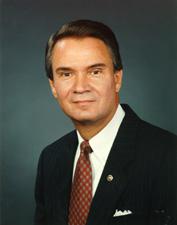
Sponsors
Timeline
Signed by President.
Signed by President.
Became Public Law No: 100-330.
Became Public Law No: 100-330.
Measure Signed in Senate.
Presented to President.
Presented to President.
Called up by House Under Suspension of Rules.
Passed/agreed to in House: Passed House by Voice Vote.
Passed House by Voice Vote.
Executive Comment Requested from Commerce, Interior, State, DOT.
Referred to Subcommittee on Fisheries and Wildlife Conservation and the Environment.
Message on Senate action sent to the House.
Referred to House Committee on Merchant Marine and Fisheries.
Passed/agreed to in Senate: Passed Senate with an amendment and an amendment to the Title by Voice Vote.
Passed Senate with an amendment and an amendment to the Title by Voice Vote.
Committee on Commerce. Reported to Senate by Senator Hollings with an amendment in the nature of a substitute and an amendment to the title. With written report No. 100-316.
Committee on Commerce. Reported to Senate by Senator Hollings with an amendment in the nature of a substitute and an amendment to the title. With written report No. 100-316.
Placed on Senate Legislative Calendar under General Orders. Calendar No. 614.
Committee on Commerce. Ordered to be reported with an amendment in the nature of a substitute favorably.
Committee on Commerce. Hearings held in conjunction with the National Ocean Policy Study.
Introduced in Senate
Read twice and referred to the Committee on Commerce.